
If you want the short answer, here it is: start with The Spy Who Came in from the Cold if you love moral gray zones, grab Agent in Place if you want globe-trotting action with real stakes, and pick up Choke Point if you want a patriotic hero who never slows down. Those three cover most of what makes readers fall in love with this genre, but they're not the whole picture.
You came here because scrolling through hundreds of espionage thriller novels is exhausting, and you just want someone who's read widely in the genre to point at a shelf and say "start here." That's what this list does. Below are quick, no-nonsense picks across the genre's major flavors, each with a one-line reason and a "best for" label so you can grab your next read in the next thirty seconds.
- The Spy Who Came in from the Cold — best for readers who want moral ambiguity over gunfights.
- Agent in Place — best for fans of fast, geopolitically grounded action.
- Choke Point — best for readers who want a clear-cut hero and relentless pacing.
- Red Sparrow — best for readers who crave tradecraft realism.
- Slow Horses (series starter) — best for character-driven, dryly funny espionage.
- The Bourne Identity — best for newcomers who want cinematic momentum.
- The Kremlin's Candidate — best for readers hooked on modern Russia-America tension.
- The Tehran Initiative — best for fans of political thriller stakes tied to real headlines.
Editor's snapshot: Richard's curated shortlist for this article lands on six essential entry points, weighted to cover Cold War classics, modern techno-thrillers, and one 2026 release worth watching.
Key Takeaways
The best spy thriller reading strategy pairs one Cold War classic for depth with one modern techno-thriller for pace, then commits to a series once you know which arc you actually want to follow.
| Point | Details |
|---|---|
| Start with contrast | Read one classic (le Carré) and one modern pick (Greaney or Thor) to find your lane fast. |
| Match mood to subgenre | Use tone, pacing, realism, and protagonist type to route yourself to the right shelf. |
| Series need commitment | Character-driven series like Slow Horses or Red Sparrow reward reading in strict order. |
| Standalones lower the barrier | Books like The Constant Gardener or I Am Pilgrim deliver a full arc in one sitting. |
| Access matters as much as picks | Thedigitalreads offers instant PDF, EPUB, and DOCX downloads across 139-plus titles, including 26 free ones. |
Table of Contents
- What Makes a Great Spy Thriller Book
- Best Spy Thriller Series and Where to Start Reading
- How to Pick the Right Spy Thriller for Your Mood
- Meet the Curator Behind These Picks
- How History Shaped the Modern Spy Thriller
- When Real Spy Scandals Rewrite the Fiction
- My Pick for What to Read Next
- Get These Spy Thrillers as Instant Downloads
- Sources
- FAQ
What Makes a Great Spy Thriller Book
Spy thriller books succeed or fail on one core tension: the split between what a character owes their country and what they owe themselves. Experts who study the genre point to that duality, personal versus professional, moral versus mission, as the throughline separating forgettable espionage fiction from books people still recommend decades later. John le Carré built his entire career on that exact friction, and it's why his novels still top best-of lists more than sixty years after publication.
That said, "great" looks different depending on what you want from a book. Some readers want the slow burn of a mole hunt. Others want a bomb to go off by chapter three. Both camps are well served, which is why the lists below split into distinct lanes instead of one giant undifferentiated pile.
Classic Cold War Spy Novels That Still Hold Up
The Cold War didn't just give spy fiction its setting. It gave the genre its defining grammar: dead drops, double agents, and the gnawing sense that nobody, including the hero, is entirely clean. These books wrote the rules that every modern espionage thriller still argues with.
- The Spy Who Came in from the Cold by John le Carré. This is the book that proved spy fiction could be literature. Le Carré's breakthrough novel trades gadgets for grief, and the ending still gets debated in book clubs decades later. Start here if you've never read a le Carré novel.
- Tinker Tailor Soldier Spy by John le Carré. George Smiley hunts a Soviet mole inside British intelligence in a novel built almost entirely on patience, memory, and dialogue. It rewards readers who like puzzles more than gunfights.
- The Ipcress File by Len Deighton. Deighton's nameless narrator (later named Harry Palmer in film adaptations) brought working-class sarcasm to a genre that had been dominated by upper-crust operatives. It reads faster than le Carré and hits harder on wit.
- The Bourne Identity by Robert Ludlum. Amnesia, assassins, and a plot that never stops moving. Ludlum's prose is blunter than le Carré's, and that's the point: this is the book for readers who want momentum over introspection.
- The Human Factor by Graham Greene. A quieter, sadder entry from a writer who understood that betrayal in espionage fiction is rarely about ideology. It's about people protecting the person they love, consequences be damned.
- The Looking Glass War by John le Carré. Less famous than Tinker Tailor, but arguably more cynical about the bureaucratic machinery that sends agents to their deaths. Recommended once you've finished the bigger le Carré titles and want more.
- The Manchurian Candidate by Richard Condon. Brainwashing, Cold War paranoia, and a plot twist that still shocks new readers. This one leans political thriller as much as spy novel, and it holds up as cultural commentary.
- Smiley's People by John le Carré. The final act of the Karla trilogy closes Smiley's arc with the same patience and heartbreak that defined the series opener. Best read after Tinker Tailor and The Honourable Schoolboy.
Why these endure: none of them treat spying as glamorous. The genre's Cold War roots leaned into moral ambiguity and slow-burn tradecraft, a tonal choice that still separates literary espionage fiction from pure escapism.
Modern Techno-Thrillers and Action-Driven Espionage
Contemporary spy thriller books usually trade patience for speed. The tradecraft got more technical, the settings went global, and the stakes escalated from "a mole inside MI6" to "a plot that could destabilize a continent." If you bounced off the Cold War classics because they felt slow, this is your lane.
- Agent in Place by Mark Greaney. Greaney's plotting mixes Syrian civil war politics with the kind of morally gray operatives readers of the Gray Man series already love. It's a strong entry point if you want geopolitical weight without a decades-long series commitment.
- Choke Point by Brad Thor. Thor's Scot Harvath series has run for two decades on a formula that works: patriotic hero, real-world threats, and pacing that rarely lets up for a full chapter. This entry keeps that streak alive.
- Red Sparrow by Jason Matthews. Written by a career CIA officer, this novel brings procedural authenticity that most thriller writers can only approximate. If you want realism over spectacle, start here.
- The Kremlin's Candidate by Jason Matthews. The final book in the Red Sparrow trilogy pushes Dominika Egorova's arc to its conclusion, with the same insider tradecraft detail that made the series distinctive.
- Gray Man by Mark Greaney. Before Agent in Place, this launched Court Gentry as one of modern thriller fiction's most efficient antiheroes. Pure action, minimal downtime.
- The Tehran Initiative by Joel C. Rosenberg. Rosenberg writes political thrillers that lean heavily into Middle East geopolitics, often uncomfortably close to real headlines. Good for readers who want their fiction to feel ripped from a briefing room.
- I Am Pilgrim by Terry Hayes. A sprawling, ambitious thriller that jumps between a bioterror plot and a detective case, tied together by one of the genre's most compelling narrators. Long, but never boring.
What separates this shelf from the Cold War list: faster pacing, more explicit tradecraft detail, and stakes that scale to entire regions rather than single agencies. If you want a plain-language distinction, Cold War thrillers ask "who can I trust," while modern techno-thrillers ask "how fast can we stop this."
Character-Driven and Psychological Espionage Picks
Some readers don't want the plot to be the point. They want to sit inside a spy's head while their conscience slowly disintegrates. These books prioritize psychology over set pieces, and they tend to stick with readers longer because the tension isn't external, it's internal.
- Slow Horses by Mick Herron. Failed MI5 agents get exiled to a dead-end office, and somehow it's the funniest, saddest spy series running today. Jackson Lamb is one of the great antiheroes in contemporary fiction.
- A Perfect Spy by John le Carré. Widely considered le Carré's most personal book, drawing on his own complicated relationship with his father. This is espionage fiction as psychological autobiography.
- The Constant Gardener by John le Carré. Less spy novel, more grief-driven investigation into pharmaceutical corruption in Africa. It shows how far le Carré stretched the genre's boundaries.
- The Night Manager by John le Carré. A hotel manager gets recruited to infiltrate an arms dealer's inner circle, testing exactly how far he'll bend his own morality to get close to the truth.
- An Officer and a Spy by Robert Harris. A fictionalized retelling of the Dreyfus Affair that reads like a slow-motion thriller about institutional betrayal. Dense, but deeply rewarding.
- Six Days of the Condor by James Grady. The novel behind Three Days of the Condor follows a CIA researcher who stumbles onto a conspiracy inside his own agency. Claustrophobic and paranoid in the best way.
Readers who value character depth over plot mechanics tend to prefer novels that balance geopolitical tension with genuine personal cost, and following one protagonist across a series tends to deepen that payoff further than any standalone can.
Standalones vs. Series: Which Should You Pick First?
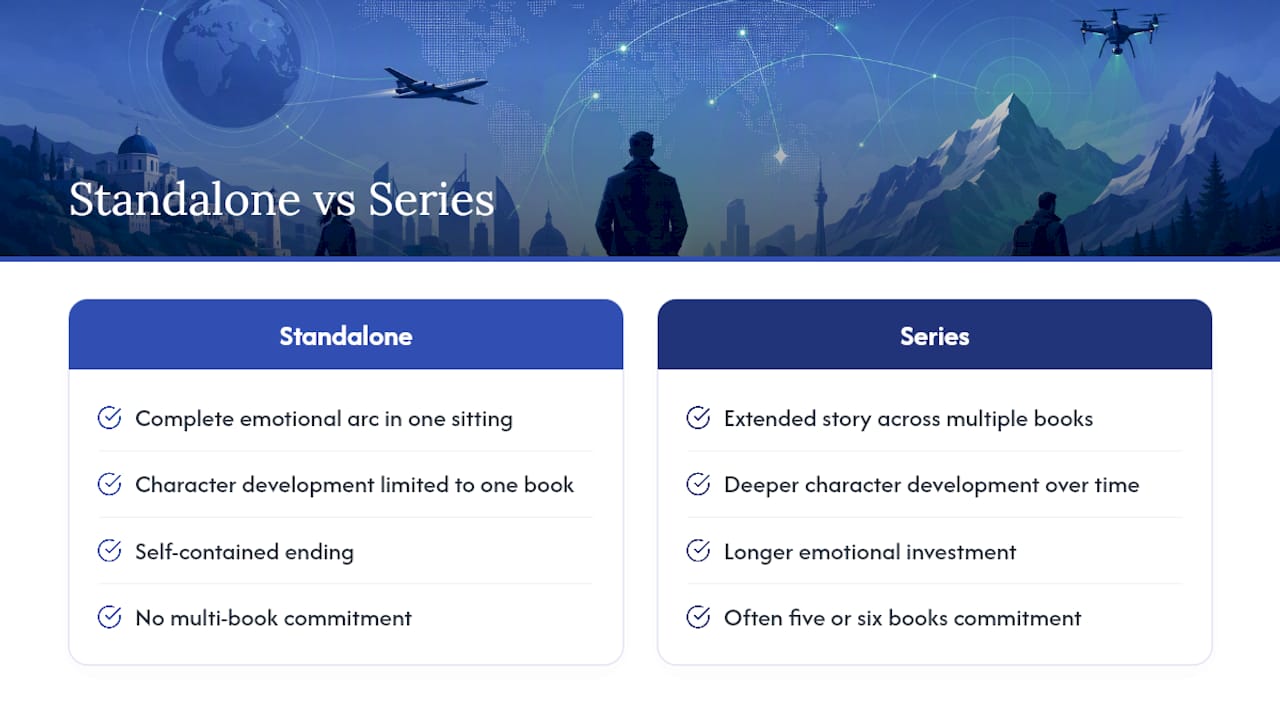
If you're not ready to commit to five or six books, standalones like The Spy Who Came in from the Cold, Red Sparrow, or An Officer and a Spy give you a complete emotional arc in one sitting. If you want to live in a world longer, series like Slow Horses or the Gray Man books reward patience with character development you simply can't get in 400 pages.
New Releases to Watch in 2026
The genre isn't standing still. Recent output leans into cyber-espionage, private intelligence contractors, and threats that blur the line between state actors and rogue tech billionaires. Watch for new entries in the Scot Harvath and Gray Man series, along with a growing wave of debut authors drawing on real intelligence and military backgrounds to write procedural detail that older thrillers couldn't access.
Best Spy Thriller Series and Where to Start Reading
Committing to a series is a bigger ask than picking up a standalone, so here's the shortcut: which book actually launches the arc worth following, and which ones let you skip ahead without missing much.
- Smiley series (John le Carré) — brooding, cerebral George Smiley. Start with Tinker Tailor Soldier Spy; it's the essential entry, not optional.
- Slow Horses (Mick Herron) — dry, bitter humor around a team of MI5 rejects. Start with Slow Horses, book one; the ensemble grows richer with each entry.
- Gray Man (Mark Greaney) — lethal, efficient Court Gentry. Start with The Gray Man; later entries like Agent in Place work fine as semi-standalone reads.
- Scot Harvath (Brad Thor) — patriotic, high-octane action. You can jump in almost anywhere, including Choke Point, without much confusion.
- Red Sparrow trilogy (Jason Matthews) — insider tradecraft, slow-building tragedy. Start with Red Sparrow; this is a linear arc that must be read in order.
- Jack Ryan (Tom Clancy) — techno-thriller pioneer, sprawling geopolitical scope. Start with The Hunt for Red October for the clearest entry point.
- Bourne series (Robert Ludlum, later continued by Eric Van Lustbader) — amnesiac assassin, breakneck pacing. Start with The Bourne Identity; skip straight to it even if you've seen the films.
A useful rule: series built around a single agency or team, like Slow Horses, tend to have loosely connected cases that let you start almost anywhere. Series built around one operative's psychological arc, like Red Sparrow or the Smiley novels, need to be read in order or you'll lose the emotional payoff. Long-running series in particular let you watch a lead character evolve across years, which is a different kind of reward than any single novel can offer.
Pro Tip: When deciding whether to follow a plot arc or a character arc, ask yourself what you remembered most from the last thriller you loved. If it was the twist, chase plot-driven series like Scot Harvath. If it was how a character changed, commit to character-driven ones like Slow Horses or Red Sparrow.
How to Pick the Right Spy Thriller for Your Mood
Every spy thriller lives somewhere on five sliding scales: tone, pacing, realism, protagonist type, and series commitment. Knowing where you want to land on each one turns an overwhelming genre into a five-minute decision.
- Do you want hope or cynicism? If you want a hero who wins clean, go modern action (Brad Thor, Gray Man). If you want moral compromise, go classic (le Carré, Greene).
- Fast plot or slow burn? Fast means Bourne, Gray Man, or Scot Harvath. Slow means Smiley, A Perfect Spy, or An Officer and a Spy.
- Do you care about tradecraft accuracy? If yes, prioritize authors with real intelligence backgrounds; insider-penned fiction like Jason Matthews' work delivers procedural detail most novelists can only guess at. If pacing matters more, realism is negotiable.
- Do you want a lone-wolf hero or an ensemble? Lone-wolf points you toward Court Gentry or Jason Bourne. Ensemble points you toward Slow Horses or the Smiley novels.
- One book or a whole series? If you're not ready to commit, pick a standalone like The Constant Gardener or I Am Pilgrim. If you want to settle in, pick a series with a strong book one.
Run through those five questions and you'll land somewhere specific. A reader who wants fast pacing, low realism concerns, a lone-wolf hero, and a series commitment lands squarely on the Gray Man books. A reader who wants slow pacing, high realism, an ensemble cast, and doesn't mind reading in order lands on Slow Horses. That's the whole system.
Meet the Curator Behind These Picks
These recommendations come from richard, a curator and editorial writer for Thedigitalreads who has spent years tracking reader trends across genre fiction, with a particular focus on how espionage and thriller readers discover their next book.
The picks above aren't a random scrape of "best of" lists. They come from a blended method:
- Editor's picks based on genre reputation and staying power (why classics like le Carré's work still lead most lists decades on).
- Community signals pulled from reader reviews and repeat requests on genre fiction platforms.
- Cross-checks against author and publisher pages to confirm series order, publication dates, and accurate blurbs before any book gets recommended.
The strongest spy thrillers don't just deliver action. They force a character to choose between the mission and the person they used to be, and that choice is what keeps readers turning pages long after the plot twist stops mattering.
Thedigitalreads carries a working catalog that spans over 139 titles across genres including thriller and espionage fiction, with 26 free titles available for readers who want to sample the genre before committing to a full purchase. That mix of curated judgment and accessible formats is what this list is built on.
How History Shaped the Modern Spy Thriller
Spy fiction doesn't exist in a vacuum. Every wave of the genre mirrors whatever conflict dominated the headlines when it was written. The Cold War gave readers a binary world, East versus West, that made moral ambiguity feel dangerous and thrilling at once. Le Carré's Britain, gray and bureaucratic, was a direct response to the myth of the glamorous secret agent that James Bond had sold a decade earlier.
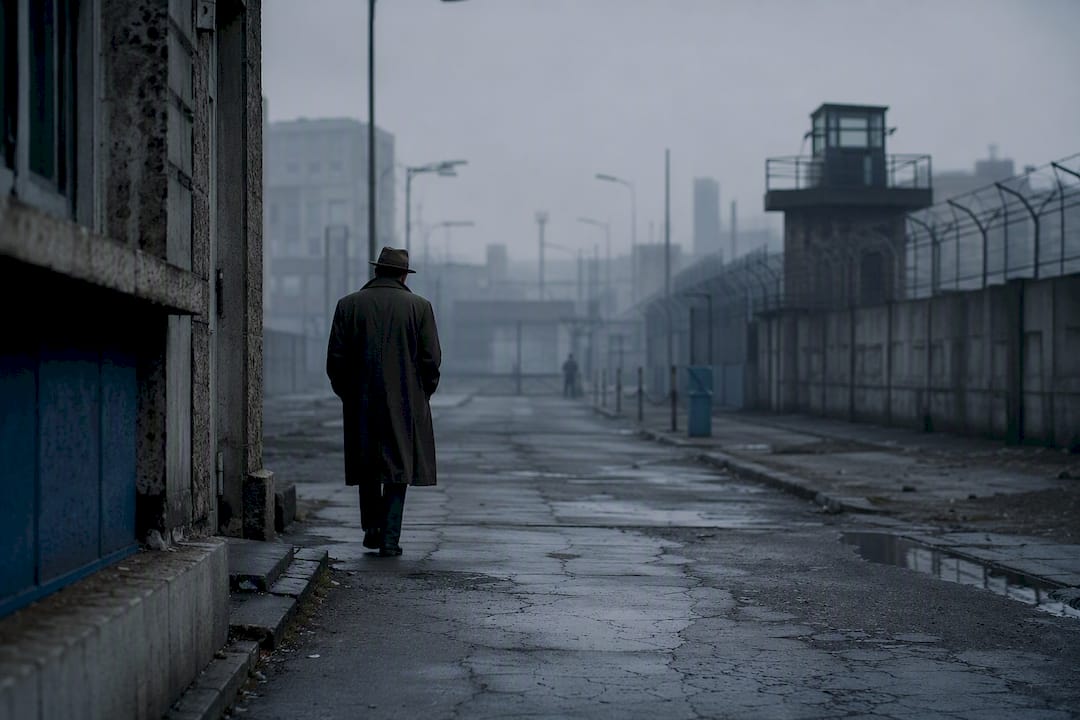
Once the Berlin Wall fell, the genre had to find new anxieties. The 1990s produced thrillers chasing loose nuclear material and rogue former Soviet agents. September 11, 2001, shifted the entire genre toward counterterrorism, private military contractors, and a blurred line between government agencies and independent operators, a shift you can see clearly in Brad Thor's Scot Harvath novels.
Today's spy thrillers increasingly center on cyberwarfare, data theft, and private tech companies operating with more reach than some governments. The settings have changed from Berlin checkpoints to server farms, but the core question hasn't: how much of yourself do you sacrifice for a cause you can't fully see the shape of? That question is the genre's real setting, more than any city or decade.
When Real Spy Scandals Rewrite the Fiction
Espionage thriller novels borrow constantly from real intelligence failures and scandals, and the traffic runs both directions. The Cambridge Five spy ring, exposed in waves from the 1950s through the 1960s, gave le Carré and his contemporaries the template for the mole-hunt plot that still anchors half the genre. Kim Philby's defection to Moscow in 1963 wasn't just a headline. It became the emotional blueprint for every novel about betrayal from within an intelligence service.
More recent events keep feeding the pipeline. The 2010 Anna Chapman spy ring arrests in the United States, a network of Russian sleeper agents living ordinary suburban lives, read almost exactly like a modern thriller plot, and several authors have leaned into that exact scenario since. Edward Snowden's 2013 disclosures pushed an entire subgenre toward surveillance, whistleblowing, and the moral cost of exposing your own government's secrets.
What's notable is how fast fiction catches up to reality now. Where Cold War novelists had years to process a scandal before writing about it, modern authors with intelligence or military backgrounds can turn real-world events into plausible fiction within a publishing cycle or two. That's part of why insider-penned thrillers like Jason Matthews' work feel so immediate: the gap between headline and novel keeps shrinking.
My Pick for What to Read Next
If you only take one recommendation from this list, make it Slow Horses. It's funny when you don't expect it, brutal when you least want it to be, and Jackson Lamb is one of the best-written antiheroes in recent fiction.
Pair it with the Apple TV+ Slow Horses adaptation, which nails the tone almost exactly, or if you want a bigger-budget, more global companion piece, try the Citadel series for a look at how spy storytelling scales up) into franchise territory. I'd love to hear what you'd pair it with instead. Drop your own "read next" pick in the comments.
Get These Spy Thrillers as Instant Downloads
Reading through this list is the easy part. Getting your hands on the actual book without waiting on a library hold or paying full hardcover price is where Thedigitalreads earns its place. Every title category on the site, including thriller and espionage fiction, is available as an instant download in PDF, EPUB, or DOCX, so you're reading in minutes instead of days.

The catalog runs over 139 titles, with 26 free titles available for readers who want to test a new author or subgenre before spending anything. Independent authors list directly on the platform, which means you'll find espionage thriller novels here that never made it onto a chain bookstore shelf. Prices skew affordable across the board, and the free tier means trying a new-to-you writer costs nothing but time. Head to the Thedigitalreads homepage and browse the thriller section to find your next spy novel and start reading tonight.
Sources
- The Spy Who Came in from the Cold | John le Carré
- John le Carré — Britannica
- Agent in Place – Mark Greaney
- Choke Point | Brad Thor | Simon & Schuster
FAQ
What Is the Best Spy Thriller Book to Start With?
The Spy Who Came in from the Cold by John le Carré is the most commonly recommended starting point because it defined the genre's moral complexity while remaining a fast, self-contained read.
What Are Some Good Spy Thrillers for Beginners?
Newcomers usually do well with The Bourne Identity for pure momentum, Agent in Place for modern geopolitical stakes, or Red Sparrow for tradecraft realism without a multi-book commitment.
What Are Some Popular CIA Thriller Books?
Red Sparrow and The Kremlin's Candidate by Jason Matthews stand out for their CIA-versus-SVR plotting, written by a former CIA officer with firsthand procedural knowledge.
What Are the Latest Espionage Thriller Books Worth Reading?
Recent output leans toward cyber-espionage and private intelligence contractors, with ongoing entries in the Scot Harvath and Gray Man series continuing to anchor the modern action lane of the genre.
Where Can I Download Spy Thriller Ebooks Affordably?
Thedigitalreads offers spy and thriller ebooks as instant PDF, EPUB, and DOCX downloads, including 26 free titles, making it a straightforward option for readers who want to sample the genre before paying full price.
Recommended
- The Most Addictive Book Series Ever Written: Stories That Will Keep You Reading Until 3 A.M.
- The Best Psychological Thriller Books to Read in 2026
- 20 Indie Books That Deserve Your Attention in 2026
- Books That Build Tension Better Than Movies: Unforgettable Novels That Keep You on the Edge of Your Seat