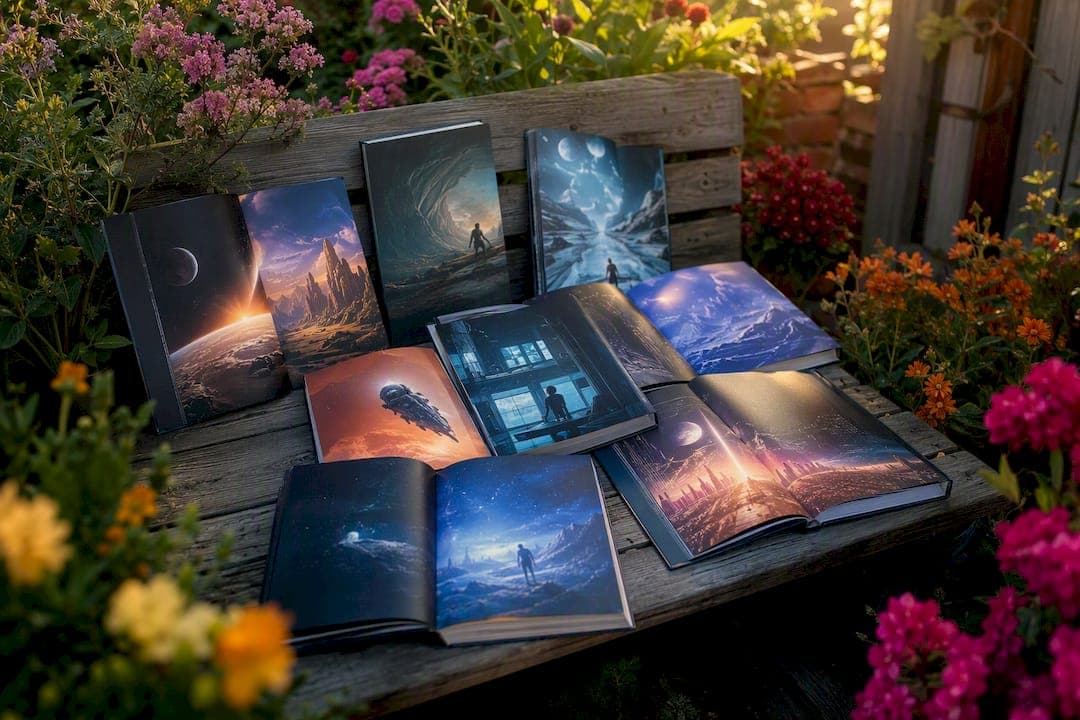
If you want the best sci-fi short stories to read right now, start with these five picks. Each one earns its spot, whether you have a short or moderate amount of time to spend.
"The Gun" by Philip K. Dick (short, free on Project Gutenberg) opens with a satellite defending a dead world, and it still lands. "Second Variety," also Dick, is longer but worth the extra twenty minutes for its Cold War paranoia. "Missing Helen" by Tia Tashiro (medium length, free at Clarkesworld) is a recent standout getting genuine buzz. For a discovery binge, FreeSFOnline catalogs dozens of legally hosted stories by theme and length. And if you'd rather browse a single curated shelf, The Digital Reads keeps affordable, downloadable short fiction collections in rotation for exactly this kind of reading.
- "The Gun" — Philip K. Dick, public domain, short read
- "Second Variety" — Philip K. Dick, public domain, medium read
- "Missing Helen" — Tia Tashiro, free at Clarkesworld, medium read
- FreeSFOnline — browse by theme, dozens of free legal links
Key Takeaways
The strongest sci-fi short-story reading strategy combines free public-domain classics, award-nominated contemporary picks, and reputable magazine archives rather than relying on any single source.
| Point | Details |
|---|---|
| Start with a shortlist | Mix one classic, one contemporary pick, and one collection to sample the format's full range fast. |
| Use Project Gutenberg wisely | It's free and legal but covers only a fraction of the genre's classic canon due to copyright rules. |
| Follow award-nominated magazines | Clarkesworld, Lightspeed, and Uncanny consistently produce Hugo and Nebula-caliber contemporary work. |
| Filter by theme and length | Match stories to your available time and mood using flash fiction, short story, or novelette labels. |
| Browse curated collections | The Digital Reads offers themed, affordable, and free digital short-fiction collections in EPUB, PDF, and DOCX formats. |
Table of Contents
- Curated Classics: Essential Sci-Fi Short Stories From the Golden Age
- Contemporary and Award-Recognized Short Stories Worth Your Time
- Where to Read Sci-Fi Short Stories Legally and for Free
- How to Choose Which Short Stories to Read Next
- Why Trust These Picks: The Digital Reads' Curation
- Cyberpunk, Space Opera, and Other Subgenres Worth Exploring
- How Sci-Fi Short Stories Evolved Into a Serious Literary Format
- Authors Who Defined the Genre Through Short Fiction
- Tips for Writing Your Own Sci-Fi Short Story
- What Actually Makes a Sci-Fi Short Story Worth Your Time
- Read More Sci-Fi Short Fiction With The Digital Reads
- Sources
- FAQ
Curated Classics: Essential Sci-Fi Short Stories From the Golden Age
Golden-age short fiction built the genre's vocabulary: robots with rules, first contact gone sideways, machines that outthink their makers. Most of these stories are brief reads and reward you with ideas that still feel sharp decades later.
Reprint frequency is a decent shortcut for finding the stories that mattered most. Sites like ISFDB's most-viewed short fiction list track how often a story gets anthologized, and that number tends to track quality better than any single critic's opinion.
- "The Gun" by Philip K. Dick — a lone automated weapon defends a ruin nobody remembers building. Public domain, short.
- "Second Variety" by Philip K. Dick — soldiers face self-replicating machines that mimic humans. Public domain, medium length.
- "The Last Question" by Isaac Asimov — a computer spans eons trying to answer one impossible query. Widely anthologized, short.
- "Nightfall" by Isaac Asimov — a planet with six suns experiences darkness for the first time in millennia. Medium length.
- "Flowers for Algernon" by Daniel Keyes — an experiment in intelligence told through a changing narrator's own words. Longer, emotionally heavy.
- "The Cold Equations" by Tom Godwin — a stowaway and a pilot face a math problem with no good answer. Short, brutal.
- "A Sound of Thunder" by Ray Bradbury — a time-travel safari goes wrong in one small, devastating way. Short.
- "The Nine Billion Names of God" by Arthur C. Clarke — monks and computers race to finish a cosmic task. Short.
Many of these titles remain under copyright even decades later, so public-domain access is the exception, not the rule. A guide like MG Herron's roundup of public-domain sci-fi is a useful map for figuring out which classics you can legally read for free versus which ones require a purchased anthology.
Organize your reading by mood rather than chronology. Want dread? Start with "The Cold Equations." Want wonder? "Nightfall" delivers it in under 25 minutes.
Contemporary and Award-Recognized Short Stories Worth Your Time
Modern short fiction moves faster and takes more chances than the golden age ever did. Magazines like Lightspeed) have become the genre's proving ground, publishing new voices alongside established names and building reputations that eventually lead to Hugo, Nebula, and Locus nominations.
- "Missing Helen" by Tia Tashiro (Clarkesworld) — a quiet, unsettling story about memory and identity that's free to read right now.
- "The Long Way Home" style Hugo finalists — check Clarkesworld's archive for recent nominees; the magazine consistently produces award-shortlisted work.
- Lightspeed's monthly original fiction — new stories publish alongside reprints, giving you a mix of fresh and proven work in one place.
- Uncanny Magazine features — known for character-driven speculative fiction that regularly earns award nods.
- Reedsy's curated contemporary picks — a list of 150-plus free sci-fi short stories that mixes newer, lesser-known writers with established ones.
Award nominations aren't the only quality signal, but they're a fast filter when you're short on time. A Hugo or Nebula nod means a panel of engaged readers or genre professionals already vetted the story against a full year of competition.
- Follow Clarkesworld, Lightspeed, and Uncanny directly for steady, free access to new work.
- Check Locus Magazine's annual recommended reading list for a broader net.
- Use Reedsy's list when you want volume over curation.
- Bookmark magazine archives rather than relying on search, since older issues can be hard to find otherwise.
If AI-driven speculative fiction interests you, The Digital Reads also tracks AI-themed science fiction, providing readers who want to go beyond short stories into full-length treatments of the same ideas.
Where to Read Sci-Fi Short Stories Legally and for Free
Project Gutenberg is the backbone of free, legal classic reading. It hosts full eText downloads for older stories whose U.S. copyright lapsed or was never renewed, which explains why certain Philip K. Dick stories are there while most of his novels are not. The catalog is a genuine gift, but it's a fraction of the genre's full canon. Plenty of famous golden-age authors remain under copyright, so don't expect every classic name to show up.
For contemporary work, go straight to the source magazines. Clarkesworld posts many stories free on-site. FreeSFOnline indexes links across dozens of magazines and author sites, saving you the trouble of hunting down each publication individually.
- Project Gutenberg — classic, public-domain full texts, free EPUB/PDF/text downloads
- FreeSFOnline — an index of legal links across magazines and personal author sites
- Clarkesworld, Lightspeed, Uncanny — contemporary magazines with free selected stories
- Reedsy — a large, community-curated list organized by theme
Pro Tip: When browsing Project Gutenberg or magazine archives, search by estimated word count if you want to match a story to your available time. A 3,000-word story runs about 12 minutes; a 7,500-word novelette can take 30 or more.
How to Choose Which Short Stories to Read Next
Picking a short story shouldn't take longer than reading one. A few filters make the decision almost automatic.
- Filter by theme first. Decide if you want first contact, AI, dystopia, or space adventure, then search magazine archives or FreeSFOnline by that tag.
- Check the length label. Flash fiction runs under 1,000 words; short stories run up to about 7,500; anything longer edges into novelette territory.
- Look for award nods. A Hugo, Nebula, or Locus nomination is a fast, reliable quality filter, especially for contemporary work you haven't heard of.
- Sample one story before committing to a collection. Reading a single story from an author is a low-risk way to test their voice before buying a full anthology or novel.
- Watch reprint frequency. Stories that keep showing up in anthologies decades later have earned that staying power for a reason.
Reading strategy matters as much as the picks themselves. Some readers do best binging a single-author collection over a weekend; others prefer sampling one story a night from a themed magazine issue. Both work. What matters is matching the format to how much attention you actually have that day.
Pro Tip: If a story hooks you within the first three paragraphs, that's usually a sign the author's longer work will hold your attention too. Use short stories as an audition for full novels.
Why Trust These Picks: The Digital Reads' Curation
The Digital Reads maintains ongoing, themed guides across science fiction, including breakdowns of short science fiction books under 300 pages and genre-specific deep dives like military science fiction. That's the same editorial approach applied here: matching stories to reading time and mood, not just chasing a "best of" list.
- Curated, themed reading guides updated regularly across genres
- Free and affordably priced digital formats, including EPUB, PDF, and DOCX
- A direct path from short-story discovery to full-length collections when a story hooks you
Cyberpunk, Space Opera, and Other Subgenres Worth Exploring
Short fiction is where sci-fi subgenres test their ideas before novels commit to them. Cyberpunk stories, built around hackers, corporate control, and body modification, tend to run tight and fast, often under 5,000 words, because the mood depends on urgency. Space opera in short form usually sacrifices some worldbuilding for a single sharp moment: a battle, a betrayal, a first contact.
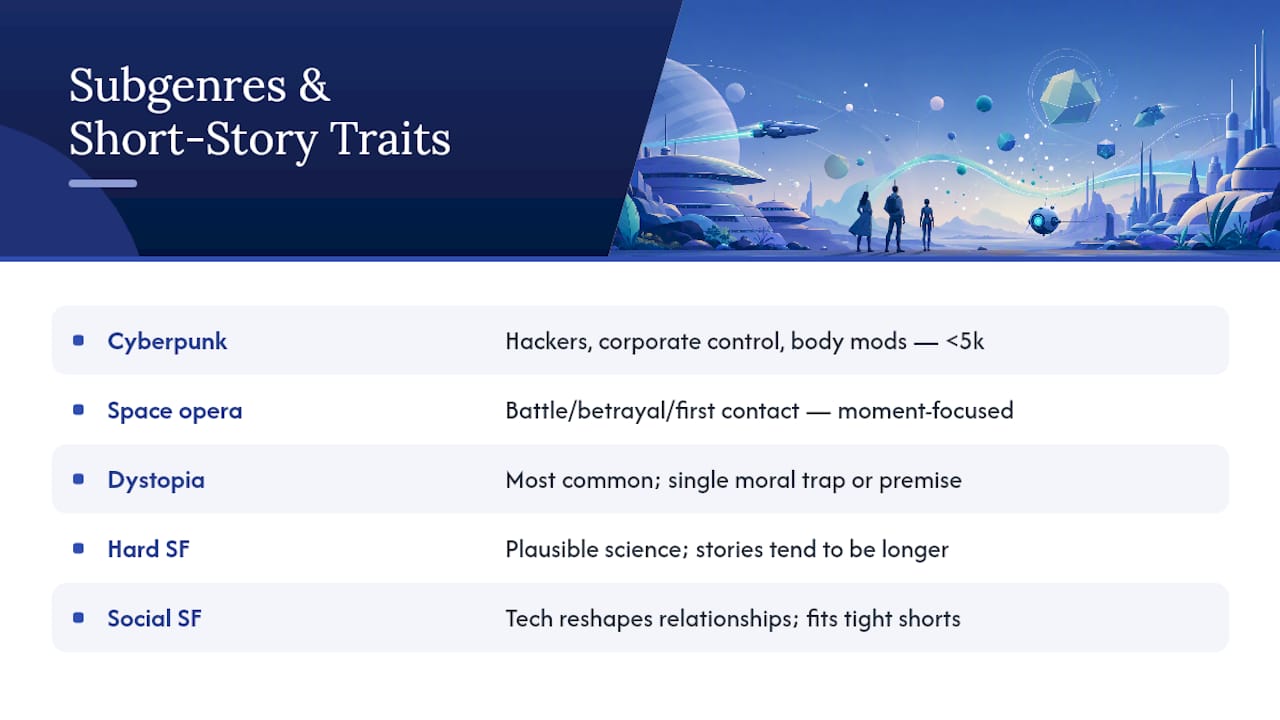
Dystopia is probably the most common short-story mode in the genre, and it's easy to see why. A dystopian premise can land its entire argument in a few thousand words, the way "The Cold Equations" does with a single unsolvable math problem. Hard SF, focused on plausible science, tends to run longer because the ideas need room to breathe, while social science fiction, which asks how technology reshapes relationships or power, often works best in exactly the tight space a short story provides.
Knowing your subgenre preference speeds up discovery considerably. If dystopia is your mood tonight, skip the space battles and go straight to stories built around a single moral trap. If you want scale and adventure, space opera short fiction gives you a taste without the 600-page commitment of a full saga.
How Sci-Fi Short Stories Evolved Into a Serious Literary Format
Sci-fi short stories didn't start as a stepping stone to novels. Pulp magazines in the 1920s through 1950s, the era now called the genre's golden age, made the short story the primary format because that's what magazine publishing demanded: fast, punchy, and finished in one sitting.
That format shaped the genre's instincts. Writers learned to deliver one big idea cleanly rather than build sprawling universes, which is why so many classic sci-fi concepts (the three laws of robotics, the last-man-on-Earth premise, first-contact dread) were born in stories under 10,000 words. The short story format forced discipline that the genre's best novels later inherited.
Digital magazines and free online archives have kept that tradition alive rather than replacing it. Clarkesworld, Lightspeed, and Uncanny now function the way pulp magazines once did: a proving ground where new writers build reputations one story at a time before ever selling a novel. The format's significance hasn't faded. If anything, free digital distribution has made short fiction more accessible than at any point in the genre's history.
Authors Who Defined the Genre Through Short Fiction
Philip K. Dick built his reputation largely on short stories before his novels caught on, and "The Gun" and "Second Variety" show the paranoid, machine-distrust themes that would define his entire career. Isaac Asimov used short fiction to work out robotics ethics in real time; "The Last Question" and "Nightfall" both show his instinct for taking one idea to its logical extreme.
Ray Bradbury approached the format almost like poetry, and "A Sound of Thunder" remains one of the tightest cause-and-effect stories the genre has produced. Arthur C. Clarke used short fiction to explore scale, cosmic and otherwise, with "The Nine Billion Names of God" packing an entire theological argument into a few thousand words.
Contemporary writers are following the same path. Tia Tashiro's "Missing Helen" shows how a newer author can use the short form to build a reputation the same way Dick and Asimov once did, one tightly controlled idea at a time, before ever attempting a novel.
Tips for Writing Your Own Sci-Fi Short Story
If these stories have you itching to write your own, the format rewards a narrower approach than a novel does. Start with one idea, not three. "The Cold Equations" works because it commits to a single unsolvable problem; it doesn't try to also build a galactic empire around it.
Word count discipline matters more in sci-fi short fiction than in most genres, because you're often introducing an unfamiliar concept and resolving it in the same breath. Flash fiction (under 1,000 words) forces you to imply worldbuilding rather than explain it. A standard short story (up to about 7,500 words) gives you room for one twist and one consequence, not several.
Study the magazines you'd want to submit to. Clarkesworld, Lightspeed, and Uncanny each have a recognizable house style, and reading a dozen recent issues will teach you more about pacing and structure than any writing guide. Reprint anthologies and "best of the year" collections are also useful studying tools since they show you what already cleared a high bar.
What Actually Makes a Sci-Fi Short Story Worth Your Time
Most reading advice treats short stories as a lesser cousin to novels, something you read while waiting for the "real" book. That's backwards. The format's constraints are exactly what make stories like "The Cold Equations" or "The Nine Billion Names of God" hit as hard as they do. A novel can wander. A short story cannot.
The conventional advice to just "read the classics" also undersells how much good work is happening right now in magazines like Clarkesworld. Golden-age stories built the genre's vocabulary, but treating them as the finish line means missing writers actively pushing the format forward today.
If you take one thing from this list, prioritize access over ambition. A free, legally hosted story you'll actually read beats a locked-away classic you'll keep meaning to track down. Start with what's in front of you, whether that's a Project Gutenberg download or this week's Clarkesworld issue, and let curiosity pull you toward the rest of the canon from there.
Read More Sci-Fi Short Fiction With The Digital Reads
Free magazine archives and public-domain sites are fantastic for individual stories, but they can't give you the curated, themed experience of a collection built for a specific mood or subgenre. That's the gap The Digital Reads fills. Instead of hunting across a dozen sites for the right story, you get a browsable catalog of affordable and free digital titles, organized by genre, ready to download in EPUB, PDF, or DOCX in seconds.
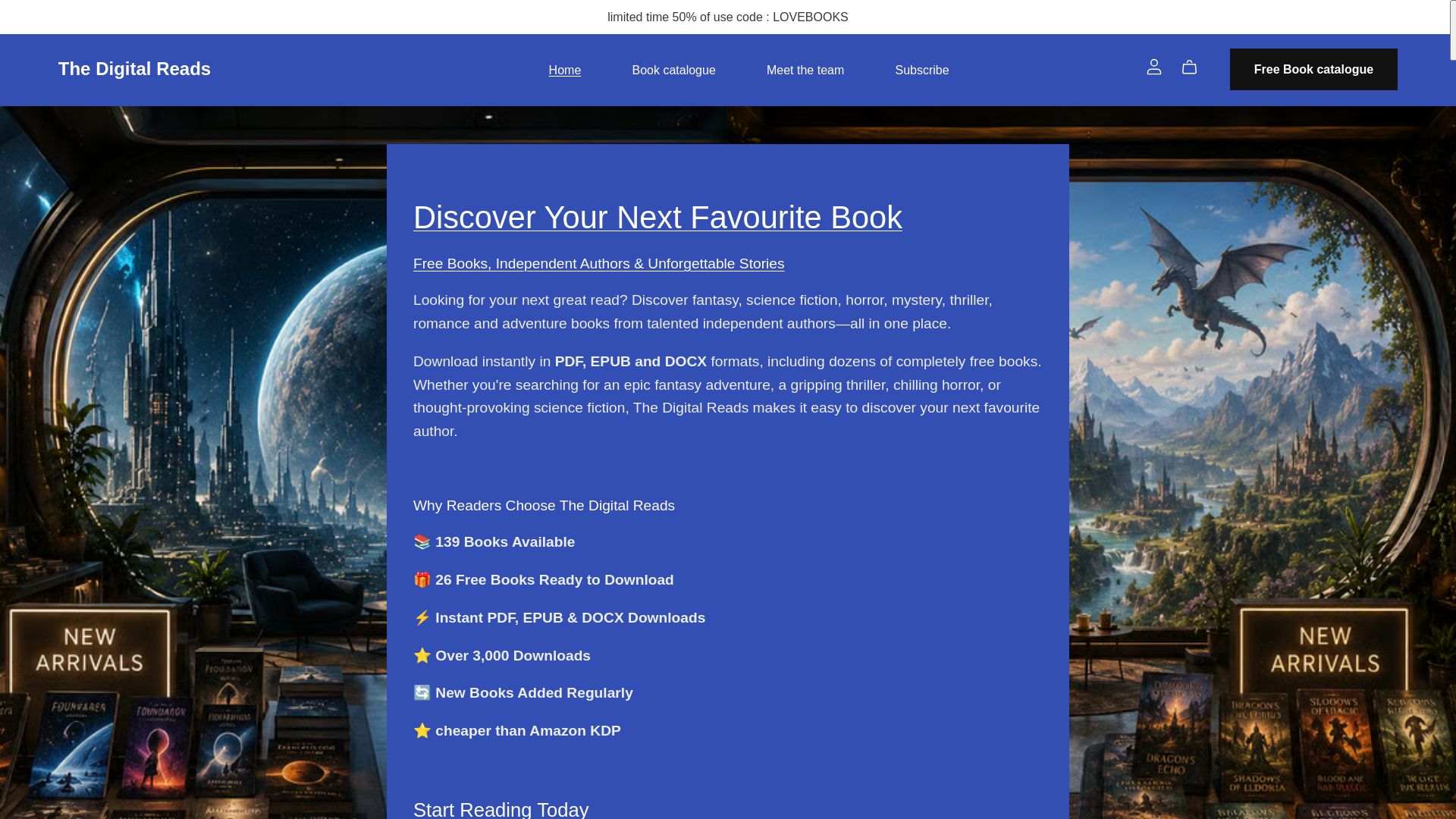
The catalog leans on independent authors you won't find through a traditional publisher, which means fresh short fiction and collections alongside familiar genre staples. If you enjoyed exploring cyberpunk, dystopia, or space opera above, the site's science fiction ebooks for readers who want scientific realism page is a natural next stop. And if you're an indie author sitting on a short story collection of your own, platforms like Payhip show how straightforward it is to sell digital downloads directly to readers. Browse the current catalog on The Digital Reads and download your next short story collection today.
Sources
- The Gun, by Philip K. Dick — Project Gutenberg
- Free Speculative Fiction Online: Links to Science Fiction & Fantasy Stories Online
- Tia Tashiro — 'Missing Helen' (Clarkesworld)
FAQ
What are the top 100 best science fiction short stories?
There's no single official ranked list, but reprint frequency on sites like ISFDB and award records from the Hugo and Nebula awards are the most reliable ways to build your own curated list.
What is the best sci-fi story of all time?
Reasonable people disagree, but Isaac Asimov's "The Last Question" and Philip K. Dick's "Second Variety" both appear on nearly every serious best-of list thanks to decades of anthology reprints.
What is the shortest famous short story?
Flash fiction pieces under 1,000 words exist throughout the genre, though most widely cited "shortest" sci-fi stories are closer to a page or two rather than a single sentence; length varies by source and definition.
What are some good science fiction short story collections?
Single-author collections from writers like Philip K. Dick and Isaac Asimov are a strong start, and curated digital catalogs like The Digital Reads offer themed collections in EPUB, PDF, and DOCX for readers who want variety without hunting across multiple sites.