
You want reading options nobody else is talking about, and here they are: 20 outstanding but obscure sci-fi books, grouped by taste, plus the exact tactics for finding more once you burn through this list. These span the 1950s through the 2010s, and every one is easy enough to track down through libraries or secondhand sellers.
TL;DR:
- Many obscure sci-fi books, such as Rogue Moon and Gateway, remain hidden due to limited print runs, rights issues, or their complex, demanding style.
- These titles often have strong award or community recognition but rarely reach mainstream audiences or remain in popular discourse.
- Finding them requires community-curated lists, niche forums, verifying editions on ISFDB, and sampling the first chapters before purchasing.
- Reissues, academic interest, or adaptations can revive forgotten titles and expand their visibility over time.
- Digital platforms like Thedigitalreads offer easy access to many of these hidden gems, making their discovery more accessible for patient, curious readers.
Table of Contents
- Obscure Sci-Fi Books Worth Hunting Down Right Now
- Themed Reading Lists for Every Kind of Sci-Fi Mood
- How to Find More Hidden Sci-Fi Gems on Your Own
- Why Great Sci-Fi Books Fade Into Obscurity
- What Makes This Curation Worth Trusting
- A Curator's Honest Take on Reading Obscure Sci-Fi
- Browse Curated Hidden Gems on Thedigitalreads
- Where to Keep Digging for More Hidden Sci-Fi
- Sources
- FAQ
Obscure Sci-Fi Books Worth Hunting Down Right Now
Before you scroll, know this: "obscure" doesn't mean bad. It usually means a book got squeezed out by bigger releases, awkward timing, or a publisher that folded before word of mouth could build. The BookRiot team has made this exact point about niche sci-fi getting penalized by mainstream reader expectations, not by actual quality.
Here's the shortlist, organized loosely from classic to contemporary, with a note on who each book fits.
- Rogue Moon by Algis Budrys (1960). A Hugo nominee about a deadly alien artifact and the men sent to die exploring it, over and over. Read this if you like existential horror wrapped in Cold War paranoia. Despite the nomination, it's remembered by almost no one today, overshadowed by flashier contemporaries.
- The Warlord of the Air by Michael Moorcock (1971). Steampunk before steampunk had a name, following a British officer flung a century forward into an alternate 1970s. Good for readers who want political bite with their pulp adventure.
- The Player of Games by Iain M. Banks (1988). Technically part of the Culture series, but often skipped in favor of Consider Phlebas. A master game player gets recruited for something much bigger than a tournament. Perfect entry point if space opera intimidates you.
- Gateway by Frederik Pohl (1977). Alien tunnels, desperate prospectors, and a narrator hiding a devastating secret. Won the Hugo and Nebula but rarely shows up on modern "best of" lists.
- The Dispossessed by Ursula K. Le Guin (1974). Overshadowed by The Left Hand of Darkness, this one dissects anarchist utopia versus capitalist excess through a physicist caught between two worlds. Ideal for readers who want ideas over action.
- Roadside Picnic by Arkady and Boris Strugatsky (1972). A Russian classic that inspired the Stalker film and the S.T.A.L.K.E.R. games, yet English-language readers rarely encounter it outside translation circles. Strange, bleak, unforgettable.
- The Wanderer by Fritz Leiber (1964). A rogue planet appears near Earth and chaos follows across a huge ensemble cast. Fits readers who like disaster fiction with a cosmic twist.
- The Fifth Head of Cerberus by Gene Wolfe (1972). Three linked novellas about clones, colonists, and identity on an alien world. Dense, rewarding, and criminally under-discussed next to Wolfe's New Sun series.
- A Case of Conscience by James Blish (1958). A Jesuit priest investigates an alien species that seems to have no concept of sin. Great for readers who want theology braided into first-contact fiction.
- The Sheep Look Up by John Brunner (1972). Environmental collapse rendered in unflinching, journalistic detail decades before climate fiction became its own shelf category. Heavy, but essential for readers who like their sci-fi grounded in dread.
- Ammonite by Nicola Griffith (1993). An anthropologist studies an all-female colony on a plague world. Quietly influential in feminist sci-fi circles but rarely mentioned outside them.
- The Star Fraction by Ken MacLeod (1995). Mercenaries, hackers, and fractured left-wing politics in a near-future Britain. Fits readers who want their sci-fi tangled up in real ideology.
- Random Acts of Senseless Violence by Jack Womack (1993). A teenage girl's diary chronicles societal collapse in a near-future New York. Disturbing, literary, and largely forgotten outside cult reading circles.
- The Complete Roderick by John Sladek (1980, 1983). A satirical robot-coming-of-age story that skewers American consumer culture. Funny, sharp, and virtually invisible on modern recommendation lists.
- Slow River by Nicola Griffith (1995). A corporate heiress fakes a new identity after a kidnapping goes wrong. Won the Nebula but rarely appears alongside more famous 1990s winners.
- The Rediscovery of Man by Cordwainer Smith (collected 1993). Short stories built around a strange future history spanning thousands of years. Ideal for readers who want myth-scale sci-fi in bite-sized pieces.
- The Book of the New Sun side stories, collected under Gene Wolfe's shorter works. For readers who loved the main series and want more of that same dying-Earth atmosphere without committing to another full tetralogy.
- Emphyrio by Jack Vance (1969). A young man on a feudal, art-obsessed planet slowly uncovers a conspiracy that runs his entire society. Vance's prose style alone makes this worth the search.
- The Genocides by Thomas M. Disch (1965). Alien plants quietly overtake Earth, and humanity's response is smaller and sadder than any blockbuster invasion story. Bleak, brisk, and largely absent from casual sci-fi conversations.
- Camp Concentration by Thomas M. Disch (1968). Prisoners in a secret facility are given a drug that boosts intelligence while killing them slowly. A tight, claustrophobic read for fans of morally uncomfortable sci-fi.
Several of these titles, along with dozens more like them, are available through independent and public-domain digital editions, often as free or low-cost downloads in common ebook formats. If a title above catches your eye, check there first before hunting a used bookstore.
Themed Reading Lists for Every Kind of Sci-Fi Mood
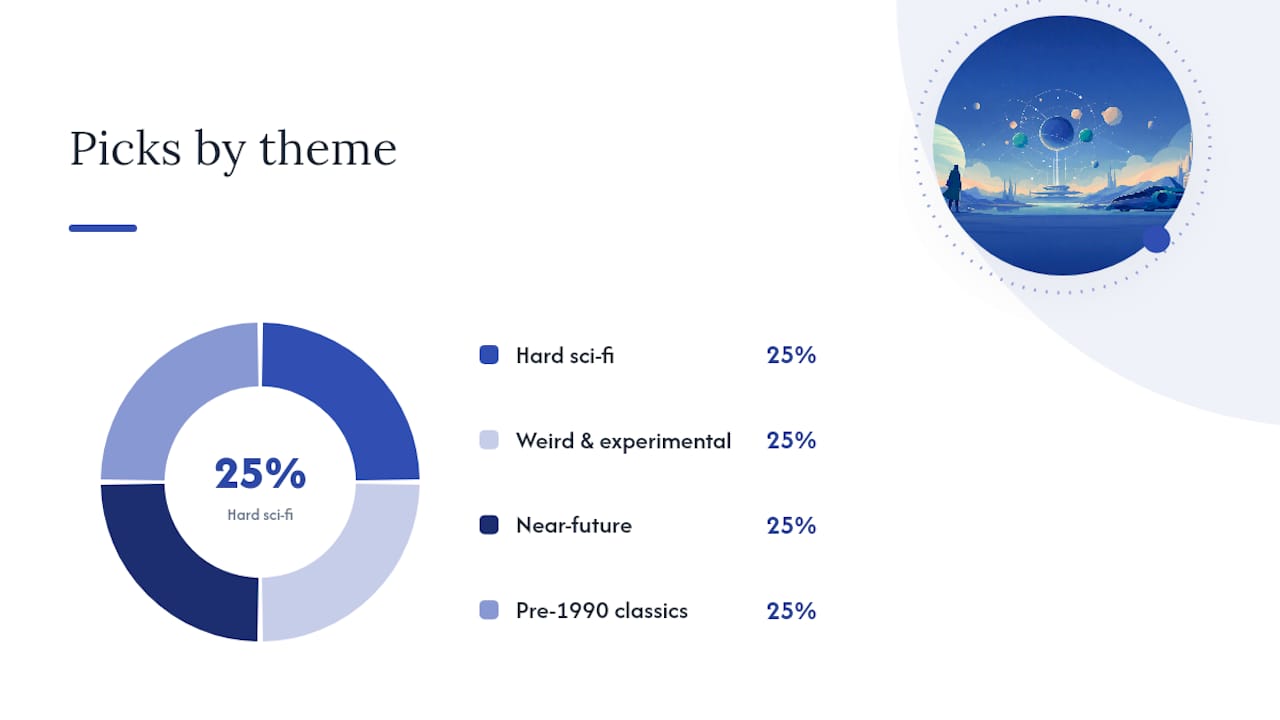
Not every reader wants the same flavor of strange. Here's how the shortlist breaks down by taste, so you can jump straight to what fits your mood tonight.
Obscure hard sci-fi (heavy on science, light on hand-waving):
- Rogue Moon — psychological horror grounded in real physics problems around teleportation.
- Gateway — orbital mechanics and alien engineering treated with genuine rigor.
- The Fifth Head of Cerberus — biology and colonization mechanics woven into a literary structure.
Readers who want more in this vein should check Thedigitalreads' best hard sci-fi books for serious readers for further picks beyond this list.
Weird and experimental (structure-bending, tone-shifting, occasionally unsettling):
- The Complete Roderick — satire disguised as a robot bildungsroman.
- Roadside Picnic — dread rendered through spare, almost documentary prose.
- Camp Concentration — a diary format that turns claustrophobic by the final third.
Near-future literary sci-fi (character-first, speculative but grounded):
- Random Acts of Senseless Violence — a teenager's collapsing world, told in her own voice.
- The Sheep Look Up — journalistic, multi-threaded, deeply anxious about environmental ruin.
- The Star Fraction — politics and technology tangled together in a plausible near future.
Pre-1990 forgotten classics (the deep cuts):
- A Case of Conscience — theology and first contact from the late 1950s.
- The Wanderer — ensemble disaster fiction from the mid-1960s.
- Emphyrio — Vance's prose stylings applied to a feudal-future conspiracy.
Every pick here also appears, in expanded form, in Thedigitalreads' longer roundup of 25 hidden sci-fi books you've probably never heard of, if you want even more direction before committing.
How to Find More Hidden Sci-Fi Gems on Your Own
Finding great obscure sci-fi is a skill, not luck. Here's the workflow serious readers actually use:
- Start with community-curated lists, not algorithmic bestseller charts. Goodreads Listopia's obscure sci-fi and fantasy list sets a deliberate threshold, usually under 5,000 ratings, to filter out anything mainstream.
- Check enthusiast forums like r/printSF, where longtime readers trade recommendations that never reach retail algorithms.
- Verify editions on the Internet Speculative Fiction Database before you buy. ISFDB confirms whether a title has been reissued recently, which often signals renewed critical interest.
- Sample the first 10 to 20 percent of any candidate before committing. Voice and pacing tell you more in twenty pages than any star rating will.
- Don't trust a low Goodreads average by itself. Niche and challenging books routinely score lower simply because they don't match mainstream reader expectations, a pattern BookRiot has documented directly.
A search phrase like "obscure hard sci-fi Hugo nominee forgotten" or "underrated sci-fi 1970s Goodreads Listopia" will surface far better results than a generic "best sci-fi books" query.
Pro Tip: Keep a running list of authors whose backgrounds are unusual for the genre. M.A. Foster's intelligence-work background, for instance, shaped a distinct tone in his fiction that's easy to spot once you know to look for it.
Why Great Sci-Fi Books Fade Into Obscurity
Obscurity almost never means low quality. Most of the time, a book simply arrived at the wrong moment. Rogue Moon earned a Hugo nomination in 1960 and still got buried under bigger, splashier contemporaries within a decade.
Rights issues do the rest of the damage. A novel can go out of print for years because a small publisher folded, an author's estate stalled on renewals, or a translation deal never materialized. Limited initial print runs made this worse before ebooks existed. Stylistic difficulty plays a role too. Books like Camp Concentration or The Fifth Head of Cerberus ask more of readers than a typical space adventure, so they never built the word-of-mouth momentum that keeps a title in print.
The good news is that obscurity isn't permanent. Reissue campaigns, academic interest, and the occasional film or game adaptation can pull a forgotten book back into the light, which is exactly what happened when Roadside Picnic found new readers through the Stalker franchise decades after publication.
What Makes This Curation Worth Trusting
Every book listed above earned its spot through a real filter: award history, community reputation on outlets like Goodreads Listopia, or coverage from editorial sources like TechRepublic's underrated sci-fi gallery. None of these were chosen because they're trending. They were chosen because they hold up.
This platform carries many titles across science fiction, fantasy, horror, thriller, and romance, including free downloads, with access in common ebook formats. Because it emphasizes works by independent authors, readers can find voices and out-of-print gems not typically found in major retail outlets. The list was assembled with a focus on titles that reward patient readers over hype-driven bestsellers.
A Curator's Honest Take on Reading Obscure Sci-Fi
The first time I found a truly obscure sci-fi novel worth remembering, it wasn't through a bestseller list. It was buried three pages deep in a forum thread where someone casually mentioned Camp Concentration like everyone already knew it. Nobody did. That's usually how these books surface, sideways, through someone who read past the cover and the rating.
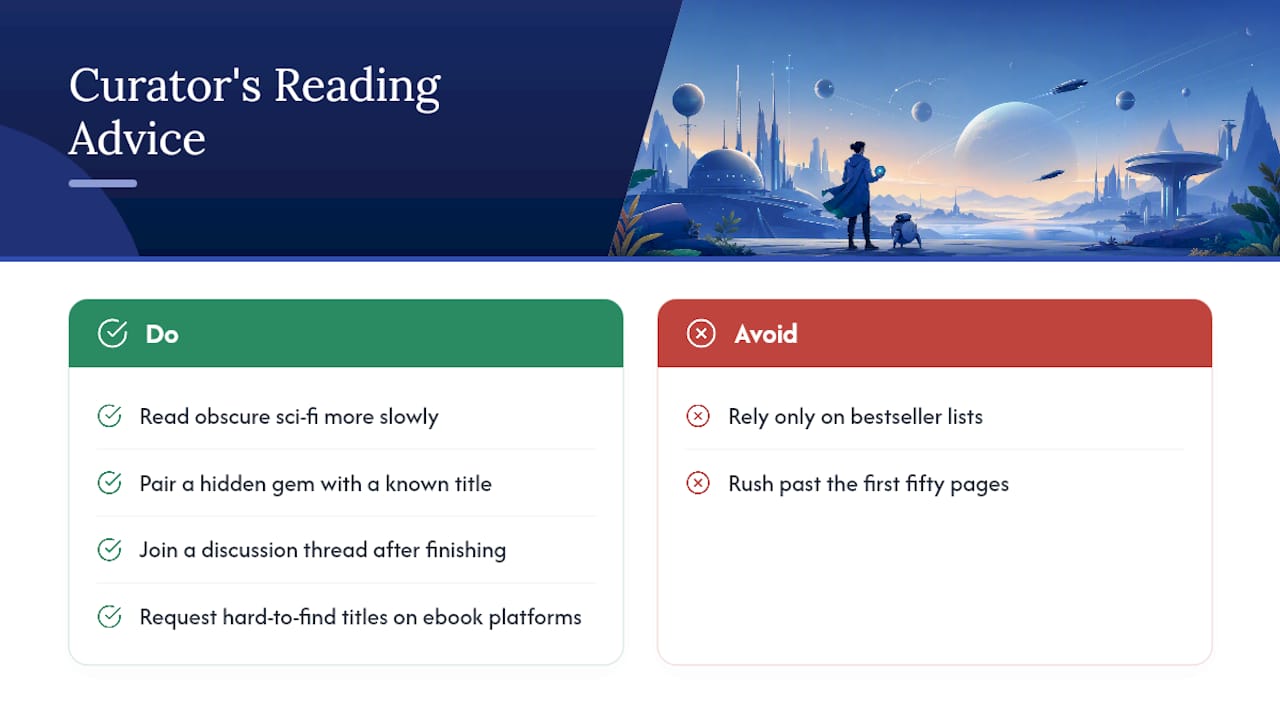
Read obscure sci-fi slower than you'd read a bestseller. These books often front-load their strangeness, and rushing past the first fifty pages means missing the setup that makes the ending land. Pair a hidden gem with a well-known book from the same decade. Reading A Case of Conscience next to a more famous 1950s title shows you exactly what the genre was capable of when nobody was watching the sales charts. Join a discussion thread once you finish. Half the fun of an obscure book is comparing notes with the handful of other people who found it too.
If there's a title you've been hunting for and can't find, you can request it through some digital ebook platforms. Curated lists only get better with reader input.
— richard
Browse Curated Hidden Gems on Thedigitalreads
Some digital ebook platforms get you straight to reading by providing instant downloads in common formats when you find something worth reading.
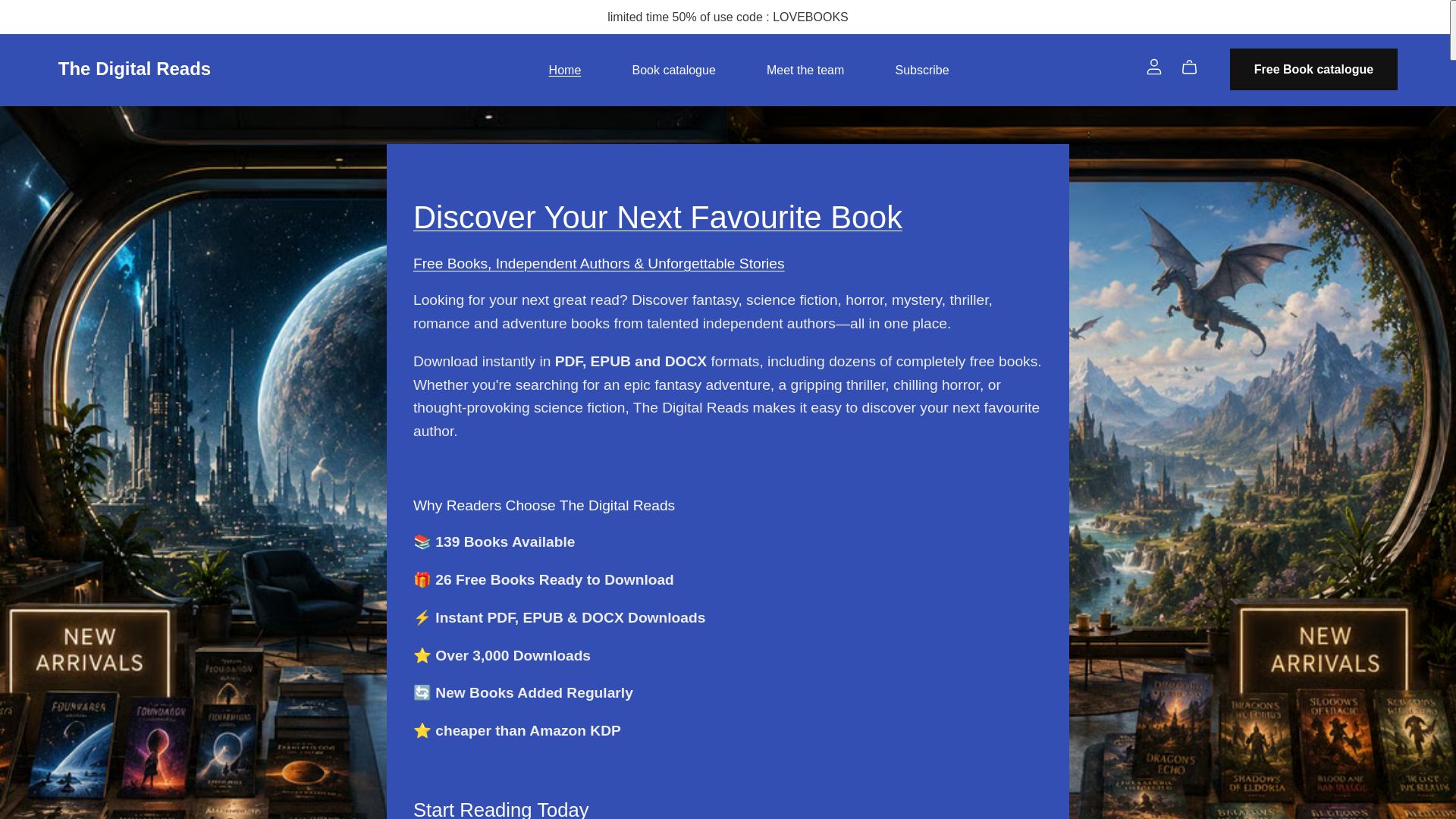
The catalog runs deep, with 139 titles across science fiction, fantasy, horror, thriller, and romance, including 26 free downloads for anyone who wants to try a new author without spending a dime. Because the platform works directly with independent authors, you'll find titles that never made it onto a major retail shelf, exactly the kind of hidden gem this article has been pointing you toward. If a title from this list, or one you've heard about elsewhere, isn't in the catalog yet, you can request it directly. Start by browsing the full catalog on Thedigitalreads and see what's waiting for its next reader.
Where to Keep Digging for More Hidden Sci-Fi
A handful of sources consistently surface titles worth your time. The Stat offers personal, decades-tested picks from a longtime reader rather than an algorithm. Collider's roundup of forgotten sci-fi classics explains why award-nominated books still vanish from public memory. BookRiot's piece on underrated Goodreads titles tackles the rating-bias problem directly, and TechRepublic's gallery of underrated science fiction mixes classic and modern picks worth cross-checking against any list you build yourself. For readers who like tracking upcoming releases and reissues, Book-A-Holic's monthly anticipated books roundup is worth a bookmark too.
Sources
- 8 Perfect Sci-Fi Books That Nobody Remembers — Collider
- Stat
- The Most Underrated Sci-Fi Books on Goodreads — BookRiot
- The 27 most underrated science-fiction books — TechRepublic
FAQ
What sci-fi book did Stephen King say he regrets writing?
King has publicly expressed regret over parts of his early novel Rage, a book he wrote under the pen name Richard Bachman, due to its subject matter resonating with real-world school violence, though this leans horror and thriller more than pure science fiction.
What are some popular bizarre sci-fi books?
Camp Concentration, The Complete Roderick, and Roadside Picnic all qualify as bizarre in the best sense: unconventional structure, unsettling premises, and endings that resist easy summary.
What are some rare science fiction books worth tracking down?
The Genocides, Emphyrio, and early editions of A Case of Conscience are genuinely hard to find in print, though digital editions through platforms like Thedigitalreads make many of these titles far easier to access than a secondhand hunt.
What are some of the most underrated sci-fi series?
Cordwainer Smith's linked stories collected as The Rediscovery of Man and Gene Wolfe's shorter works tied to The Book of the New Sun both rank among the most underrated series, praised by dedicated readers but rarely mentioned in mainstream best-of roundups.
Recommended
- 25 Hidden Sci-Fi Books You’ve Probably Never Heard Of: Underrated Science Fiction Gems Worth Discovering
- 50 Hidden Science Fiction Books You've Probably Never Heard Of
- 20 Indie Books That Deserve Your Attention in 2026
- Best Science Fiction Ebooks Under £1: 10 Indie Sci-Fi Books Worth Discovering in 2026