
If you want a short answer before anything else: start with Dungeon Crawler Carl by Matt Dinniman. It's fast, funny, and mechanically satisfying without drowning you in stat tables. Here are seven more picks to match your taste right now:
- Dungeon Crawler Carl (Matt Dinniman) — Best for beginners who want dark humor and strong pacing. Available in ebook, audiobook, and print.
- The Land: Founding (Aleron Kong, Chaos Seeds series) — Best for readers who want deep crafting systems and long-haul epic progression. Ebook and audiobook.
- Threadbare (Andrew Seiple) — Best for cozy, character-driven readers who enjoy a teddy bear protagonist navigating a game world. Ebook and print.
- He Who Fights with Monsters (Jason Cheyne) — Best for readers who want a lighter tone with steady, satisfying power growth. Ebook and audiobook.
- Defiance of the Fall (JF Brink) — Best for readers who want fast-paced action and a grittier edge. Ebook and audiobook.
- Cradle (Will Wight) — Best for readers who prefer progression fantasy with minimal stat screens but maximum momentum. Ebook, audiobook, and print.
- Ready Player One (Ernest Cline) — Best for gaming-culture fans who want a gateway read before committing to full LitRPG. Ebook, audiobook, and print.
- Ascend Online (Luke Chmilenko) — Best for readers who enjoy classic MMORPG immersion and party dynamics. Ebook and audiobook.
Pro Tip: Pick your first LitRPG by crunch tolerance, not by what's trending. If stat screens and skill trees excite you, go straight to The Land or Defiance of the Fall. If you're not sure, Dungeon Crawler Carl or He Who Fights with Monsters will hook you without overwhelming you.
Table of Contents
- What exactly are LitRPG books?
- Why do readers get hooked on this genre?
- How do you pick the right LitRPG for your taste?
- The best starter LitRPG books to read right now
- LitRPG recommendations by mood and reading style
- Popular LitRPG series and where to start
- Where to find and buy LitRPG in the U.S.
- Key Takeaways
- Why the "start with the most popular" advice often backfires
- Affordable indie LitRPG downloads at Thedigitalreads
- Useful sources and further reading
What exactly are LitRPG books?
LitRPG — short for Literary Role-Playing Game — is a fiction genre where the story's world operates by explicit game mechanics. Characters gain experience points, level up, and receive visible stat screens or system notifications directly on the page. That last part is the defining feature: the mechanics aren't just implied, they're shown. You'll read something like "[Level Up! Strength +2, Endurance +1]" mid-chapter, and those numbers actually matter to the plot.
Three things you'll almost always see in a LitRPG novel:
- Stat screens or status windows — numerical snapshots of a character's attributes, usually displayed in a box-formatted block of text.
- Level-up notifications — explicit in-world messages confirming progression after combat, crafting, or skill use.
- Skill and ability descriptions — named powers with defined effects, often with cooldowns, mana costs, or damage ranges spelled out.
The genre sits on a spectrum between system-heavy LitRPG and broader progression fantasy. Progression fantasy — think Cradle or The Wandering Inn — centers on quantifiable growth but skips the explicit stat screens. Isekai, a Japanese subgenre, often overlaps with LitRPG when a character is transported to a game-like world, but isekai doesn't require visible mechanics. If you see XP bars and skill trees on the page, it's LitRPG. If the growth is implied rather than displayed, you're likely in progression fantasy territory.
Why do readers get hooked on this genre?
The short answer: measurable growth is the emotional engine. Watching a character level up substantially over the course of the story delivers a specific kind of satisfaction that most fantasy novels don't offer. Every fight has a payoff you can see in numbers. Every grind has a visible reward. It's the same psychological loop that makes RPG video games compelling, transferred to prose.
That said, the genre runs a wide spectrum. Some LitRPG novels are essentially optimization puzzles in narrative form — readers who love spreadsheets and build theory will feel right at home. Others use the game mechanics as a light scaffold for character-driven stories where the numbers are almost incidental. Story quality and narrative voice tend to determine which series last in a reader's memory long after the stat screens fade.

The genre also rewards binge reading in a way that few others do. Series like Dungeon Crawler Carl or He Who Fights with Monsters release books quickly, and the progression loop creates a natural "one more chapter" pull. Readers who burned through all of The Witcher games in a weekend often find the same energy here.
Pro Tip: Ask yourself what you want from the reading experience. If the dopamine hit of watching numbers climb is the draw, go crunchy. If you want a character you'll think about after you close the book, prioritize narrative voice over system density.
How do you pick the right LitRPG for your taste?
Before you commit to a 12-book series, ask yourself four quick questions:
- How much math do I want in my fiction? High crunch (lots of stat tables, build optimization) vs. low crunch (progression implied, mechanics light).
- Am I ready for a long series? Some LitRPG series run 10+ books with no end in sight. If you want a contained story, look for standalones or completed trilogies.
- Do I want humor or seriousness? The genre ranges from satirical comedy (Dungeon Crawler Carl) to grim survival horror (He Who Fights with Monsters leans darker in later books).
- Do I prefer a solo protagonist or party dynamics? Solo power-fantasy arcs dominate, but party-based stories like Ascend Online offer a different rhythm.
A few red flags worth knowing before you buy. Extremely long series with no narrative arc resolution can stall out — check community forums for "does this series have a satisfying ending?" before investing in a 15-book run. Readers who dislike heavy optimization often drop out of highly crunchy titles early; if that sounds like you, start with something character-forward and work your way toward the stat-heavy stuff. Also, sample the first 20–50 pages or the first chapter of an audiobook before committing. The narrator's voice in LitRPG audio productions varies enormously and can make or break the experience.
The best starter LitRPG books to read right now
These twelve titles cover the genre's main flavors. Each one is a strong entry point for a specific kind of reader.
-
Dungeon Crawler Carl by Matt Dinniman — Carl and his cat Princess Donut are thrown into a post-apocalyptic dungeon game broadcast as reality TV. The humor is sharp, the mechanics are visible but never overwhelming, and the pacing is relentless. Widely recommended as the single best first LitRPG for most readers. Available in ebook, audiobook (an exceptional production), and print via Penguin Random House.
-
The Land: Founding by Aleron Kong (Chaos Seeds, Book 1) — One of the earliest and most influential English-language LitRPG series. Richie, a gamer transported to a fantasy world, builds a settlement from scratch with deep crafting and resource systems. Heavy on mechanics, long on commitment (10+ books), and beloved by readers who want the full RPG simulation experience. Ebook and audiobook.
-
Threadbare by Andrew Seiple — A small stuffed bear becomes a golem and navigates a game world with genuine heart. The mechanics are clever, the tone is cozy-adjacent, and the story earns its emotional beats. A standout for readers who want something gentler. Ebook and print.
-
He Who Fights with Monsters by Jason Cheyne — Jason Asano is transported to a world of monsters and magic with a laid-back Australian attitude. The tone is lighter than the title suggests, the progression is steady, and the series has a large, enthusiastic readership. A top beginner recommendation for readers who want accessible entry points. Ebook and audiobook.
-
Defiance of the Fall by JF Brink — Zac Piker wakes up on an island cut off from the rest of humanity after a system integration event. The action is fast, the power scaling is aggressive, and the tone is gritty. Best for readers who want intensity from page one. Ebook and audiobook.
-
Cradle: Unsouled by Will Wight (Cradle, Book 1) — Technically progression fantasy rather than strict LitRPG (no stat screens), but it belongs on this list because it's the gateway drug for many readers who then move into heavier mechanics. The cultivation system is elegant, the pacing is excellent, and the series is complete at 12 books. Ebook, audiobook, and print.
-
Ascend Online by Luke Chmilenko — A full-immersion MMORPG story that leans into party dynamics, guild politics, and classic fantasy tropes. If you've ever played World of Warcraft and wanted to live inside it, this is the book. Ebook and audiobook.
-
The Wandering Inn by pirateaba — Originally a web serial, now available in published volumes. Enormous in scope, character-rich, and genuinely surprising in where it goes. The first arc is slow, but readers who stick with it tend to become devoted fans. Ebook and print.
-
Beware of Chicken by CraftyFoxe — A man transported to a cultivation world decides to become a farmer instead of a fighter. Warm, funny, and refreshingly low-stakes. One of the best cozy LitRPG-adjacent reads available. Ebook.
-
Dungeon Born by Dakota Krout (Divine Dungeon, Book 1) — Told from the perspective of a dungeon itself, not an adventurer. Unique POV, satisfying crafting loops, and a short enough first book to finish in a weekend. Ebook and audiobook.
-
Solo Leveling by Chugong — Originally a Korean web novel, now widely available in English translation and manga adaptation. The power fantasy is pure and unapologetic. Faster pacing than most Western LitRPGs, minimal character depth, maximum spectacle. Ebook and print.
-
Ready Player One by Ernest Cline — Not strict LitRPG (no in-world stat screens), but it's the most widely read gateway novel for gaming-culture readers. Think of it as the on-ramp before you hit the full genre. Ebook, audiobook, and print everywhere.
Quick comparison by reader type
| Title | Best For | Tone | Crunchiness | Series vs. Standalone | U.S. Availability |
|---|---|---|---|---|---|
| Dungeon Crawler Carl | Beginners | Dark humor | Medium | Series (ongoing) | Ebook, audio, print |
| The Land: Founding | Epic / system fans | Serious | Heavy | Series (10+ books) | Ebook, audio |
| Threadbare | Cozy / character fans | Warm | Medium | Series (complete) | Ebook, print |
| He Who Fights with Monsters | Beginners / light tone | Light-humorous | Light-medium | Series (ongoing) | Ebook, audio |
| Defiance of the Fall | Action fans | Gritty | Heavy | Series (ongoing) | Ebook, audio |
| Cradle: Unsouled | Progression fantasy fans | Serious | Light | Series (complete, 12 books) | Ebook, audio, print |
| Ascend Online | MMORPG fans | Adventure | Medium | Series (ongoing) | Ebook, audio |
| Beware of Chicken | Cozy / humor | Warm-funny | Light | Series (ongoing) | Ebook |
| Dungeon Born | Unique POV fans | Light | Medium | Series (ongoing) | Ebook, audio |
| Solo Leveling | Fast-paced / manhwa fans | Intense | Light | Series (complete) | Ebook, print |
| Ready Player One | Gateway readers | Nostalgic | None | Standalone | Ebook, audio, print |
LitRPG recommendations by mood and reading style
Crunchy and system-heavy
If you want the full RPG simulation — stat tables, build optimization, crafting trees — these deliver:
- The Land: Founding (Aleron Kong) — Deep settlement-building and resource management alongside the combat.
- Defiance of the Fall (JF Brink) — Aggressive power scaling with detailed skill trees.
- Dungeon Born (Dakota Krout) — Crafting-focused with a dungeon-master POV that rewards readers who like to optimize.
Comedy and satire
- Dungeon Crawler Carl (Matt Dinniman) — The gold standard for dark, satirical LitRPG.
- Beware of Chicken (CraftyFoxe) — Gentle, warm comedy; the anti-power-fantasy.
- He Who Fights with Monsters (Jason Cheyne) — Lighter in tone than most, with a protagonist who doesn't take himself too seriously.
Cozy and low-stress
- Threadbare (Andrew Seiple) — A stuffed bear protagonist keeps the stakes emotionally manageable.
- Beware of Chicken — Farming, community, and slice-of-life pacing in a cultivation world.
- The Wandering Inn — Slow-burn, character-rich, and genuinely cozy in its early arcs despite its enormous scale.
Short and bingeable
- Dungeon Born (Dakota Krout) — First book is compact and self-contained enough to finish in a sitting.
- Cradle: Unsouled (Will Wight) — Short first volume, fast pacing, immediate hook.
- Solo Leveling — Chapters are brief and propulsive; the whole series reads like a highlight reel.
Long epics and web-serial scale
- The Wandering Inn — Millions of words, dozens of POV characters, and a world that keeps expanding. Check out complex world-building reads for similar picks.
- The Land (Chaos Seeds) — Ten-plus books of deep progression.
- He Who Fights with Monsters — A long ongoing series with a large, active readership.
Indie and self-published gems
LitRPG gained its English-language foothold through web serials and self-publishing, and that indie DNA is still where a lot of the genre's most original work lives. A few worth seeking out:
- Ascend Online (Luke Chmilenko) — Self-published and built a loyal following without a traditional deal.
- Threadbare (Andrew Seiple) — Indie-published with a dedicated community.
- Beware of Chicken (CraftyFoxe) — Started as a web serial on Royal Road before moving to print.
Popular LitRPG series and where to start
| Series | Start Book | Status | Reading Order Note |
|---|---|---|---|
| Dungeon Crawler Carl | Dungeon Crawler Carl (Book 1) | Ongoing | Publication order; no skippable side arcs yet |
| Chaos Seeds | The Land: Founding (Book 1) | Complete (10 books) | Publication order; each book picks up immediately |
| Cradle | Unsouled (Book 1) | Complete (12 books) | Publication order; no spin-offs needed |
| Divine Dungeon | Dungeon Born (Book 1) | Complete | Publication order; spin-off series optional |
| He Who Fights with Monsters | Book 1 | Ongoing | Publication order; later books expand cast significantly |
| The Wandering Inn | The Wandering Inn (Vol. 1) | Ongoing | Publication order strongly recommended; POV jumps early |
| Solo Leveling | Vol. 1 | Complete | Publication order; manhwa adaptation is a valid alternative entry |
| Defiance of the Fall | Book 1 | Ongoing | Publication order; power scaling accelerates quickly |
A note on Korean and web-novel influenced series like Solo Leveling: they tend to move faster and scale harder than Western LitRPGs. If you find Western series too slow in the early books, jumping to a Korean-origin title can reset your expectations in a useful way.
Where to find and buy LitRPG in the U.S.
The genre lives across several channels, and knowing where to look saves money and time.
- Mainstream ebook retailers (Amazon Kindle, Apple Books, Barnes & Noble Nook) — Widest selection, standard pricing. Most major series are here.
- Kindle Unlimited — Many LitRPG titles are enrolled, so a subscription covers a lot of ground if you read fast.
- Audible — Dungeon Crawler Carl in particular has a standout audiobook production. Most top series have audio editions.
- Library apps (Libby / OverDrive, Hoopla) — Free with a library card. Selection varies by system, but Cradle and Ready Player One are commonly available.
- Indie marketplaces — Thedigitalreads carries genre fiction including fantasy and sci-fi titles in PDF, EPUB, and DOCX formats, with many free and low-cost options. It's a practical option for readers who want affordable digital books without a subscription commitment.
- Royal Road (royalroad.com) — Free web-serial platform where many LitRPG authors post chapters before publishing. Beware of Chicken and The Wandering Inn both started here.
- Direct author stores — Some indie authors sell directly via Payhip or their own sites, often at lower prices than major retailers.
For format decisions, the ebook vs. print question comes down to how you engage with stat screens. Some readers find the formatted stat boxes easier to skim in ebook form; others prefer print for long sessions.
Pro Tip: Before buying a crunchy LitRPG, search the title on Reddit's r/litrpg or Goodreads and look for tags like "system-heavy," "stat porn," or "light mechanics." Community tags are more reliable than cover copy for predicting how dense the mechanics actually are.
Key Takeaways
The single most useful thing you can do before picking your first LitRPG series is to match your crunch tolerance to the book's system density — that one decision prevents most early drop-offs.
| Point | Details |
|---|---|
| Start by crunch level | Match system density to your tolerance; beginners do best with medium-crunch titles like Dungeon Crawler Carl. |
| Sample before committing | Read the first 20–50 pages or try an audiobook chapter before investing in a long series. |
| Story beats mechanics long-term | Narrative voice and character stakes matter more than stat density for series you'll finish and remember. |
| Use indie channels for affordability | Royal Road, direct author stores, and Thedigitalreads offer free or low-cost access to genre fiction without subscription lock-in. |
| Thedigitalreads for indie LitRPG | Browse Thedigitalreads for affordable fantasy and sci-fi ebook downloads in multiple formats, including free titles. |
Why the "start with the most popular" advice often backfires
The conventional wisdom in LitRPG communities is to start with whatever's topping the Goodreads lists or dominating Reddit recommendations that week. The problem is that the most-discussed titles are often mid-series entries or books that reward readers who already understand the genre's conventions. A new reader who picks up Book 4 of a beloved series because it has the most reviews is going to be lost.
There's also a mismatch problem with crunch. The titles that generate the most community enthusiasm tend to be the ones with the deepest systems — the books where readers have spent hours theorycrafting builds and debating optimal skill choices. That's genuinely fun if you're already bought in. For someone who just wants a good story with game elements, it can feel like homework.
The staged approach works better: start accessible, find out whether you like the genre's rhythm, then move toward heavier mechanics if you want them. Dungeon Crawler Carl earns its reputation as the default first pick precisely because it doesn't require prior genre fluency. The humor carries you through the mechanics, and by the time the stat screens get complex, you're already invested in Carl and Princess Donut.
One more thing worth saying: progression fantasy and LitRPG are close enough that moving between them based on mood is completely normal. Readers who burn out on stat screens often find Cradle or Beware of Chicken resets their appetite. The genre is a spectrum, not a fixed category, and the best readers treat it that way.
Affordable indie LitRPG downloads at Thedigitalreads
Genre fiction readers who want instant access to fantasy and sci-fi ebooks without paying subscription fees have a practical alternative in Thedigitalreads. The marketplace carries titles across science fiction, fantasy, horror, thriller, and romance in PDF, EPUB, and DOCX formats, with a catalog that includes free titles alongside low-cost paid downloads. Independent authors upload directly, which means you'll find emerging voices and indie series that don't show up on the major retail platforms.
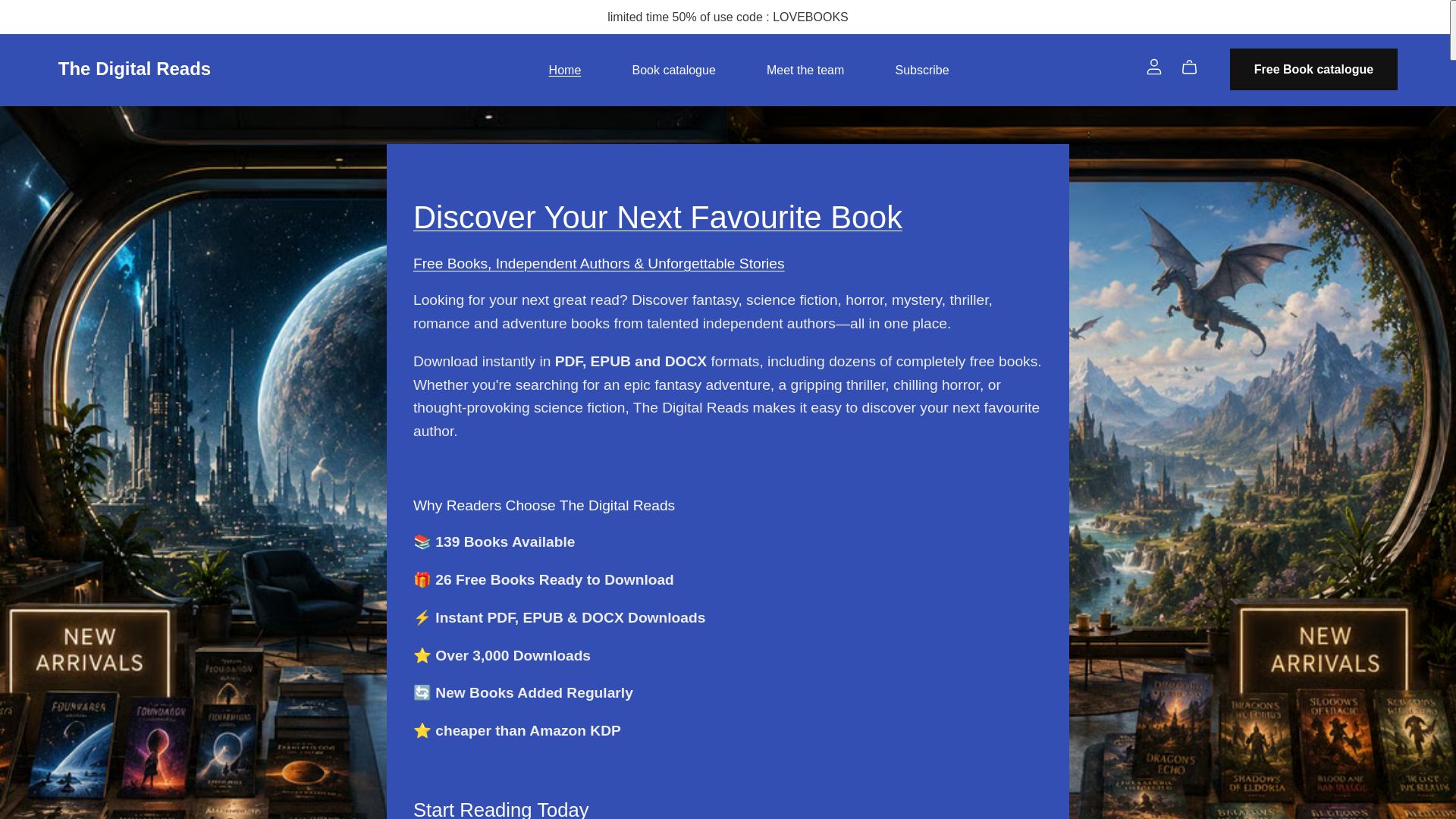
For LitRPG and progression fantasy fans specifically, the appeal is straightforward: no monthly fee, no borrowing limits, and instant download the moment you check out. If you've been working through the titles on this list and want to keep the momentum going with something new, browse the Thedigitalreads fantasy catalog and check what's available to download today.
Useful sources and further reading
- Wikipedia: LitRPG — Solid overview of the genre's origins, defining features, and key titles. Good starting point for understanding the history.
- Book Riot: Beginner's Guide to All Things LitRPG — Accessible introduction covering the LitRPG/progression fantasy spectrum and reader advice for newcomers.
- LitRPG Reads: Best LitRPG Books for Beginners — Community-sourced beginner recommendations with brief annotations; useful for cross-referencing picks.
- GameLit.com: LitRPG Guide — Covers the genre's publishing history and recommends accessible entry points; strong on context for how the genre grew.
- NextBookInTheSeries.com: Best LitRPG and Progression Fantasy Series — Curated series recommendations with notes on discovery channels and indie platforms.
- Royal Road — Free web-serial platform where many LitRPG authors post ongoing chapters. The best free sampling resource in the genre.
- Thedigitalreads: Affordable Digital Books Guide — Practical buying guide for genre fiction ebooks across multiple formats and price points.
- Thedigitalreads: Complex World Reads — Curated list for readers drawn to deep world-building, useful for LitRPG fans who want to branch into adjacent fantasy.
- Thedigitalreads: Most Popular Fantasy Books — Current popularity data for fantasy titles, useful for tracking what's resonating with readers right now.