
If IngramSpark's 90-day payout window is killing your cash flow, you have real options. For direct-to-reader sales and faster payouts, Thedigitalreads and Gumroad are the strongest picks. For wide bookstore and library reach without IngramSpark's interface friction, Draft2Digital is the easiest on-ramp. For Amazon-first authors, KDP handles everything at zero setup cost.
Quick match by goal:
- Fastest payouts + high margins: Thedigitalreads, Gumroad, Payhip
- Widest bookstore/library reach: Draft2Digital, PublishDrive, Smashwords
- Amazon visibility: Amazon KDP
- Full-service (hands-off): BookBaby
- Specialty print formats: Lulu
The core trade-off is real: direct-sales platforms return higher per-unit royalties by skipping wholesale discounts entirely, but they won't put your book on Barnes & Noble shelves. Many publishing pros combine platforms — KDP for Amazon, an aggregator for bookstores, and a direct channel for their own marketing.
Table of Contents
- How does customer support compare across these platforms?
- Which platforms are actually easy to use?
- Thedigitalreads: direct downloads, real margins
- Key Takeaways
How does customer support compare across these platforms?
Support quality varies more than most authors expect, and it matters most when a file gets rejected or a payout doesn't arrive.
BookBaby is the clear leader here. Because it bundles file prep, proofing, and distribution into paid packages, you get a human on the phone or email who knows your project. That costs more upfront, but it removes the troubleshooting burden entirely.
Draft2Digital has a strong reputation for responsive email support and an active community forum. Its automated formatting tools also reduce the number of support tickets you'd need to raise in the first place.
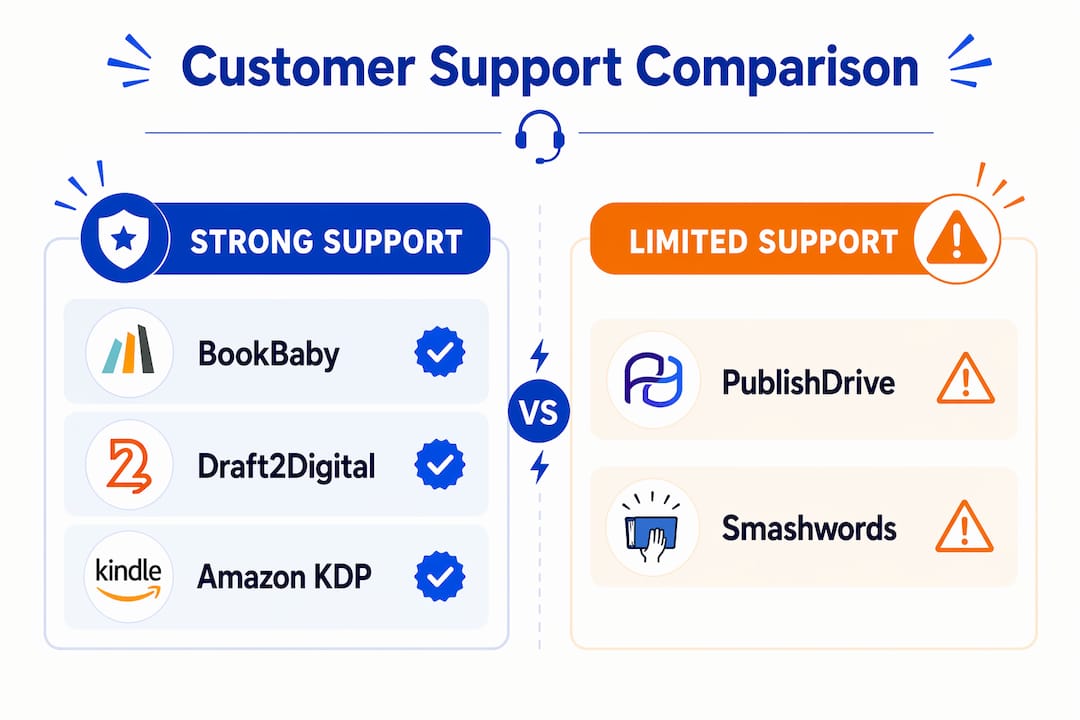
Amazon KDP offers a help center and callback support, though response times can be inconsistent. PublishDrive provides account managers on higher-tier plans. Gumroad and Payhip are largely self-serve with documentation and email ticketing — fine for authors comfortable with DIY, less ideal if you need hand-holding.
Smashwords (now part of Draft2Digital) relies heavily on its style guide and community forums rather than direct support, which works well once you know the system.
Which platforms are actually easy to use?
File prep is where most authors hit a wall. IngramSpark enforces strict print-ready PDFs with precise bleed and trim specs that reject files KDP would accept without complaint. Many authors cite these technical requirements as a frequent barrier when switching from user-friendly platforms.
Gumroad and Payhip are the simplest storefronts available. Upload a file, set a price, share a link. No formatting requirements beyond a readable ebook file.

Draft2Digital goes further by offering automated formatting that converts a Word document into a clean ebook. For print, it routes through established printers and removes IngramSpark's per-title setup fees, though it does take its own margin.
Amazon KDP has a guided upload flow that most authors find straightforward for both ebooks and print. Lulu is slightly more involved but supports specialty formats like spiral binding and photo books that no other platform handles as well.
PublishDrive has a clean dashboard but watch for the additional market-access fee on some distributor networks, which can quietly reduce your per-sale earnings.
Thedigitalreads: direct downloads, real margins
If your primary sales come from your own marketing, keeping customer data and getting paid fast will generate more lifetime revenue than chasing wholesale bookstore placement.
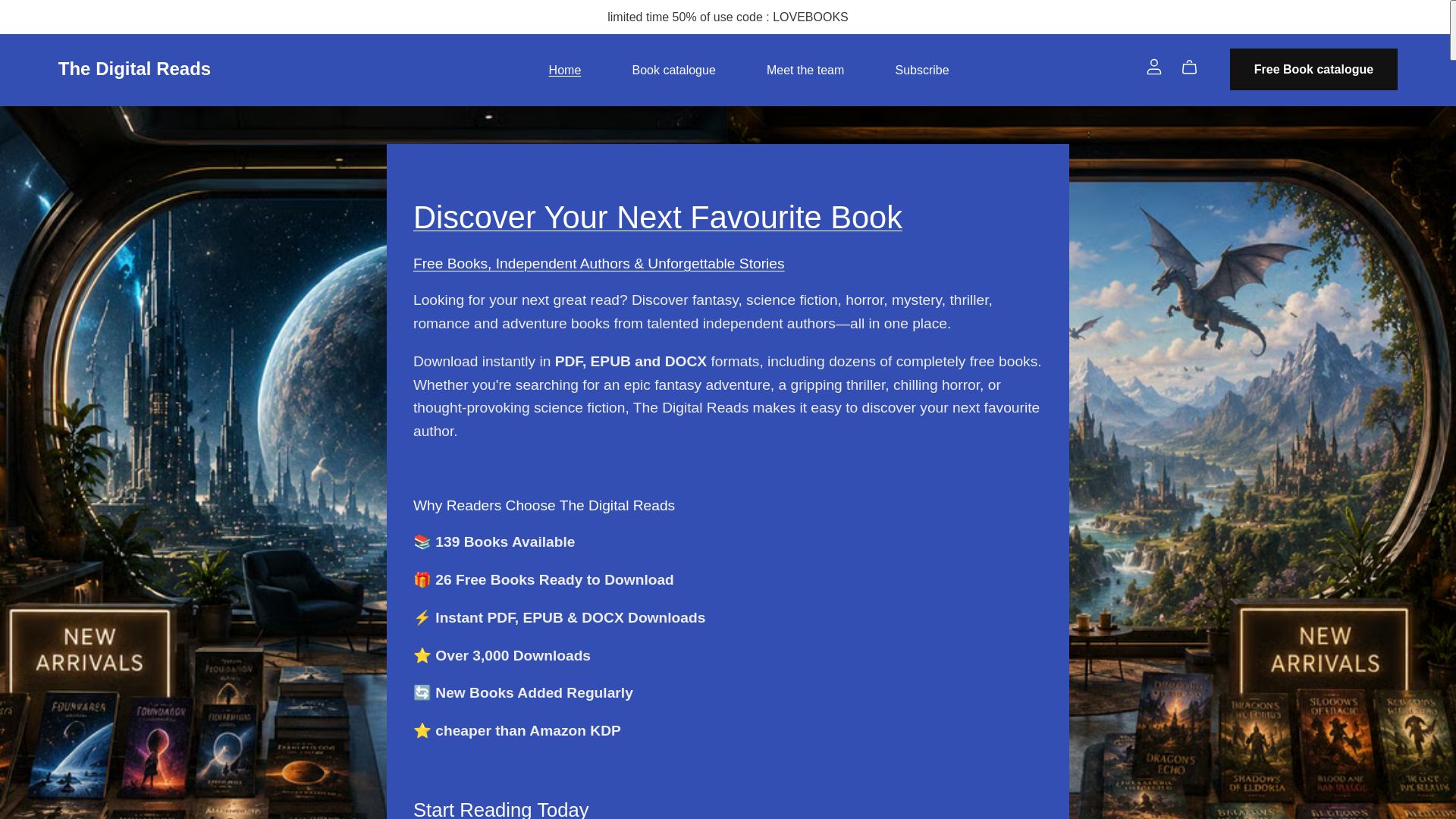
Thedigitalreads is built for exactly that. It's a genre-focused direct-download marketplace covering science fiction, fantasy, horror, thriller, and romance — with instant delivery in PDF, EPUB, and DOCX. Authors keep high margins because there's no wholesale discount chain eating into each sale. Payouts don't sit in a 90-day queue.
Pro Tip: List your first title free or at a low price to build reader reviews, then use Thedigitalreads' promotional tools to push a paid follow-up to the same audience.
To get started: upload your file, set your price (free titles work well as lead magnets), and point your existing audience to your storefront. Browse the full catalog to see how other genre authors are positioned, or go straight to the horror collection or fan fiction collection if those are your genres.
The honest trade-off: Thedigitalreads won't distribute to Barnes & Noble or library systems. For bookstore reach, pair it with Draft2Digital. For Amazon, keep KDP running in parallel. Direct sales and wholesale distribution aren't mutually exclusive.
Key Takeaways
The single most important decision when choosing among IngramSpark alternatives is matching the platform to your actual revenue model — direct sales, bookstore reach, or Amazon visibility — rather than trying to find one tool that does all three.
| Point | Details |
|---|---|
| Payout speed matters | IngramSpark's 90-day payout window is a major cash-flow pain point for many indie authors and drives them to search for direct-sales platforms offering faster monthly or daily payouts. |
| Direct sales = higher margins | Skipping wholesale discounts returns more per unit; you also keep customer data. |
| Aggregators preserve reach | Draft2Digital and PublishDrive maintain bookstore/library access with friendlier interfaces. |
| File prep is a real cost | Strict PDF specs are a barrier; platforms like D2D and Gumroad reduce that friction significantly. |
| Thedigitalreads fits direct-sales authors | Genre-focused, instant downloads, high margins — best paired with an aggregator for bookstore reach. |