
Hard science fiction is fiction that treats scientific detail and internal logical consistency as a primary narrative constraint, holding itself to real or plausible physics, math, and engineering the way other genres hold themselves to plot twists. That constraint matters because it changes what a story can do: when a spaceship can't cheat the speed of light, the drama has to come from characters solving that limit, not ignoring it. If you want three quick entry points right now, start with The Martian by Andy Weir if you want accessible, Rendezvous with Rama by Arthur C. Clarke for mid-level challenge, and Blindsight by Peter Watts if you're ready to have your brain rearranged. Thedigitalreads currently carries 139 digital book offerings across genres, including a growing shelf of hard SF titles you can download in minutes.
Key Takeaways
Hard science fiction succeeds when scientific rigor and internal consistency generate the story's central conflict, and readers progress best by starting accessible before tackling advanced titles.
| Point | Details |
|---|---|
| Definition | Hard SF uses real or plausible science, especially physics, engineering, and increasingly biology and computation, as its central narrative constraint. |
| Reading progression | Start with The Martian or Rendezvous with Rama, move to The Three-Body Problem or Red Mars, then tackle Blindsight or Permutation City. |
| Label flexibility | Hard vs. soft is a spectrum for setting expectations, not a strict rulebook, and the definition has expanded to include rigorous biology and computation. |
| Dune clarification | Dune is classified as soft SF because it prioritizes ecology, politics, and mysticism over mechanical technical detail. |
| Find the titles fast | Thedigitalreads' curated collection offers instant PDF, EPUB, and DOCX downloads across its 139 digital book offerings. |
Table of Contents
- What Makes a Science Fiction Story "Hard"?
- The Essential Hard Science Fiction Reading List
- How to Work Your Way Up to the Hardest Sci-Fi
- Common Hard SF Questions, Answered Honestly
- Authors and Subgenres to Explore Next
- Where to Find These Books in One Place
- Sources
- FAQ
What Makes a Science Fiction Story "Hard"?
A story earns the "hard" label when it treats a scientific or technical problem as the engine of its plot, not just the scenery. The genre traditionally leans on physics, astronomy, and engineering as its load-bearing disciplines, with the story's tension arising from what those fields actually allow or forbid. That's a meaningfully different promise than "the future, but shinier."
A few practical markers separate hard SF from its softer cousins:
- Technical accuracy drives the plot. Characters solve orbital mechanics, radiation exposure, or growing food on Mars, and the solution is the climax, not a footnote.
- Internal consistency stays locked. Once a book sets a rule (no faster-than-light travel, say), it doesn't quietly break that rule three chapters later to save a character.
- Math and technical explanation actually appear on the page. You'll see orbital calculations, chemistry, or code, not just a scientist character gesturing at a screen.
- The science creates the conflict. Practitioners in the field describe hard SF as using constraints like orbital mechanics or biology to generate realistic stakes, rather than simply fact-checking a story after the fact.
Here's where it gets interesting for modern readers: the label has quietly expanded. Twenty-first-century critics increasingly count biology and computation as "hard" territory when an author treats them with the same rigor once reserved for physics, which is why books built on genetic engineering or artificial cognition now sit comfortably next to orbital mechanics novels.
Treat "hard vs. soft" as a spectrum, not a border checkpoint. Critics who study the binary classification of science fiction generally agree the distinction is a useful shorthand for setting reader expectations, not a rigid taxonomy with strict admission rules. Some books lean hard in their physics and soft in their sociology. That's normal, not a contradiction.
Pro Tip: Before buying a "hard SF" recommendation, skim the first chapter for a piece of math, a diagram, or a technical aside. If the science shows its work early, the rest of the book usually will too.
The Essential Hard Science Fiction Reading List
These eleven titles show up again and again across reader-curated lists and community recommendations, which tells you something: broad agreement on a handful of exemplars usually means the label sticks for a reason.
| Title | Author | Accessibility | Primary Focus | Why It's Hard |
|---|---|---|---|---|
| The Martian | Andy Weir | Starter | Engineering | Survival math and chemistry solved on the page in real time |
| Rendezvous with Rama | Arthur C. Clarke | Starter/Mid | Physics/Astronomy | Methodical exploration of an alien structure using pure orbital logic |
| The Three-Body Problem | Liu Cixin | Mid | Physics/Astronomy | Real orbital mechanics problem drives the plot's central mystery |
| Ringworld | Larry Niven | Mid | Physics/Engineering | Megastructure engineering calculated down to material stress limits |
| Red Mars | Kim Stanley Robinson | Mid | Engineering/Biology | Terraforming detailed through geology, chemistry, and politics |
| Tau Zero | Poul Anderson | Mid | Physics | Relativistic time dilation taken to its literal, terrifying extreme |
| Pushing Ice | Alastair Reynolds | Mid/Advanced | Physics/Engineering | Hard orbital mechanics collide with a slow-burn first contact mystery |
| Blindsight | Peter Watts | Advanced | Biology/Computation | Neuroscience and consciousness theory rebuilt from research citations |
| House of Suns | Alastair Reynolds | Advanced | Physics/Astronomy | Six-million-year timeline grounded in relativistic travel constraints |
| Permutation City | Greg Egan | Very Challenging | Computation | Digital consciousness and cellular automata treated as literal physics |
| The Quantum Thief | Hannu Rajaniemi | Very Challenging | Computation/Physics | Post-quantum cryptography and physics packed into dense worldbuilding |
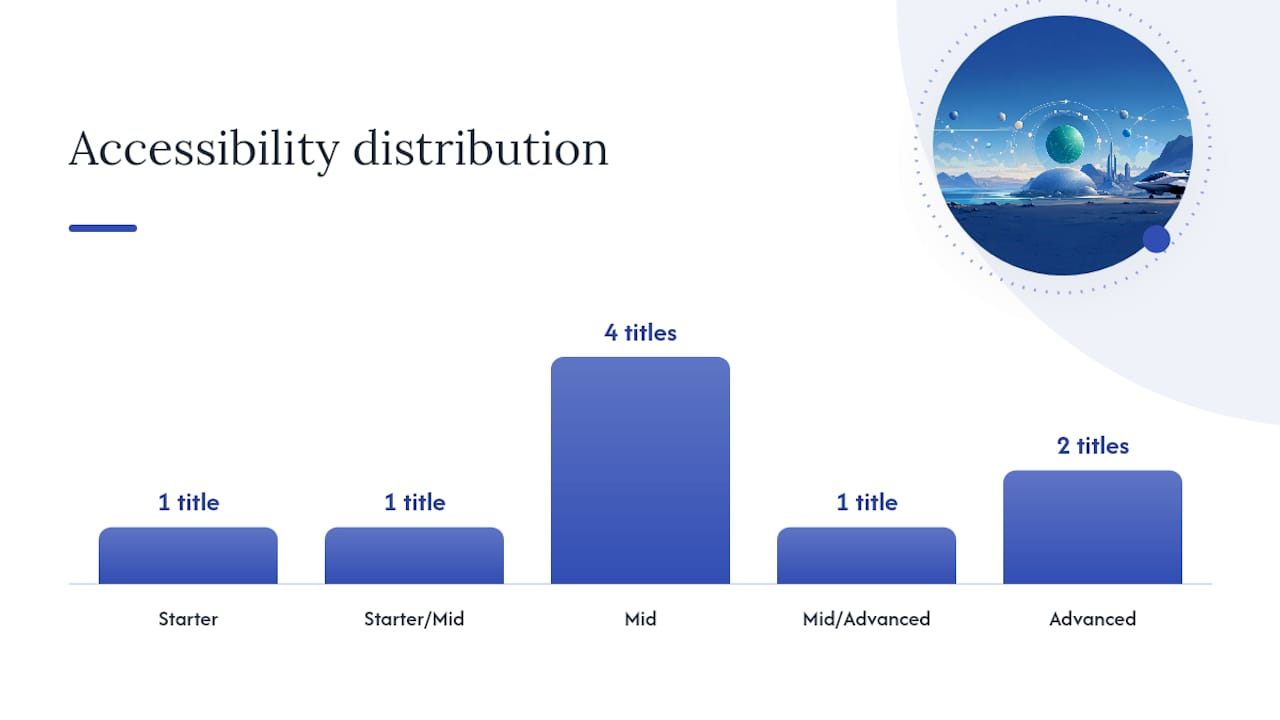
If you want a starter pick with almost no learning curve, The Martian stays the obvious answer: the science is explained as it's used, and the stakes are immediate. On the opposite end, Permutation City and The Quantum Thief assume you'll tolerate not fully understanding every term on first read, which is part of their appeal for readers who like a genuine mental workout. For more titles in this vein, Thedigitalreads' roundup of best hard sci-fi books for serious readers digs deeper into several of these authors.
How to Work Your Way Up to the Hardest Sci-Fi
Reading hard SF well is less about intelligence and more about pacing yourself the way you'd train for a longer run. Start with books where the science explains itself as the plot unfolds, like The Martian or Rendezvous with Rama. Both hand you the technical logic in digestible pieces, so you build comfort with the genre's rhythm before anything gets genuinely dense.

Once that rhythm feels natural, move into books that expect you to sit with unresolved technical tension, like The Three-Body Problem or Red Mars. These reward slower reading. Keep a running note of terms or concepts you don't fully grasp and let the story clarify them later rather than stopping to research every unfamiliar phrase.
For the true advanced tier, Blindsight, Permutation City, and The Quantum Thief, expect the science and the storytelling to arrive tangled together. Scholars who study the genre's practical craft note that internal consistency and readable scaffolding, like appendices, glossaries, and author's notes, help readers bridge technical gaps without losing narrative momentum. Use those tools. Watts includes research citations in Blindsight's afterword for a reason.
Pro Tip: Read the toughest chapter of a hard SF book twice, once for the plot and once for the science. You'll retain far more on the second pass, and it takes less time than you'd think.
If you'd rather browse by theme than by difficulty tier, Thedigitalreads' guide on ebooks that mix scientific realism with great storytelling is built for exactly that kind of reader.
Common Hard SF Questions, Answered Honestly
Is Dune hard or soft science fiction? Soft, and it's not close. Frank Herbert's saga runs on ecology, politics, and human mysticism rather than mechanically rigorous technology, which is exactly how critics classify soft SF: grounded in social sciences rather than physics or chemistry. That's not a knock on Dune. It's simply playing a different game.
Who are the "Big Three" of science fiction? The traditional answer is Isaac Asimov, Arthur C. Clarke, and Robert A. Heinlein, the Golden Age trio most associated with popularizing rigorous, idea-driven SF. But that list is a snapshot from decades ago, not a permanent ranking. Modern surveys of the genre now regularly include writers like Liu Cixin, Kim Stanley Robinson, Greg Egan, and Adrian Tchaikovsky as having redefined what rigorous SF looks like for a contemporary audience.
A few more misconceptions worth clearing up:
- "Hard SF is always dry or emotionless." Not true. Red Mars is packed with political drama and personal betrayal; the hard science is the backdrop, not a replacement for character work.
- "Hard SF can't include big philosophical ideas." Also false. Modern hard SF regularly tackles transhumanism and consciousness theory while keeping its technical rigor intact.
- "If the science isn't 100% accurate today, it's not hard SF." Scientific paradigms shift, and books that matched the physics of their era can be contradicted by later discoveries while keeping their hard reputation. What matters is whether the science was rigorous when written and internally consistent throughout.
- "Hard SF is only about space." Computation and biology now count just as much when treated with technical seriousness, which is why Blindsight and Permutation City sit firmly in the category.
Authors and Subgenres to Explore Next
Once you've worked through the canonical list, a handful of authors will keep expanding what "hard" can mean. Greg Egan pushes computation and physics to their theoretical edges; Permutation City isn't an outlier for him, it's his baseline. Kim Stanley Robinson treats ecology and planetary engineering with the same rigor other authors give orbital mechanics. Liu Cixin builds entire plots around real physics problems, then lets the philosophical fallout play out across generations. Peter Watts grounds his fiction in neuroscience and evolutionary biology, often footnoting the actual research behind his ideas. Alastair Reynolds, a trained astronomer, writes physics-heavy space opera with relativistic constraints that never bend for convenience. Hannu Rajaniemi folds post-quantum cryptography into dense, layered worldbuilding. Adrian Tchaikovsky has become a go-to name for biology-driven hard SF, particularly stories built around evolved intelligence.
That range maps onto a few subgenres worth knowing:
- Mundane science fiction limits itself to plausible near-term technology, usually confined to Earth and the solar system, avoiding speculative devices like faster-than-light travel entirely. Try Kim Stanley Robinson's Red Mars or Andy Weir's The Martian as entry points.
- Biological hard SF treats genetics, evolution, and neuroscience with the same rigor older hard SF gave physics. Peter Watts and Adrian Tchaikovsky are the names to know here.
- Computation-heavy SF builds its stakes around cryptography, artificial cognition, or simulated realities. Greg Egan and Hannu Rajaniemi anchor this cluster.
- Rationalist fiction grew out of online communities obsessed with decision theory and optimized problem-solving, and it often overlaps with hard SF's love of internally consistent logic systems.
If space opera's larger scale appeals to you more than tight technical realism, Thedigitalreads' guide to books like Foundation by Isaac Asimov shows where the two styles blend.
An Editor's Note on Curating This List
Building this list meant constantly weighing two things against each other: scientific rigor and whether a reader would actually finish the book. It's tempting to load a "hard SF" list with the densest, most technically demanding titles available, but that approach mostly produces a list nobody reads past the second entry. I tried instead to sequence titles the way I'd recommend them to a friend: start where the payoff is immediate, and only push toward the genuinely difficult material once the earlier books have built some confidence.
The inclusion of Pushing Ice alongside Reynolds' better-known House of Suns was deliberate. It shows that "hard" doesn't mean "cold." Reynolds writes rigorous orbital mechanics and still delivers a slow-burn mystery that keeps pages turning. That combination, technical constraint generating real narrative stakes rather than acting as a barrier to entry, is the thread running through every book on this list.
If you're unsure where to start today, my honest recommendation is Rendezvous with Rama. It's short, it's methodical, and it will teach you how to read hard SF without demanding a physics degree first.
Where to Find These Books in One Place
Hunting down eleven different hard SF titles across a dozen retailers gets old fast, especially when a few of them are out of print in physical form or locked behind long wait times at your library. Thedigitalreads solves that specific headache: it's a curated digital catalog where independent and established genre authors sit side by side, with instant downloads in PDF, EPUB, and DOCX so you're reading in minutes, not days.

The curated collection covers science fiction alongside fantasy, horror, thriller, and romance, and a chunk of the catalog is free to download, which makes testing out a challenging author like Greg Egan or Hannu Rajaniemi a low-risk decision instead of a $15 gamble. Browse the collection now, download your starter pick, and work your way toward the advanced end of this list on your own schedule.
Sources
- Binary classification of science fiction: Examining hard and soft SF
- Evaporating Genres (excerpt / scholarly overview)
- Hard SF — The Encyclopedia of Science Fiction
- Hard science fiction — Wikipedia
FAQ
What is an example of hard science fiction?
The Martian by Andy Weir is a widely cited example, since its plot is driven almost entirely by real chemistry, engineering, and orbital mechanics used to solve survival problems.
What are some good hard science fiction books to start with?
The Martian, Rendezvous with Rama, and Red Mars work well as starting points because each explains its science clearly as the plot unfolds. Thedigitalreads' curated collection carries several of these titles for instant download.
Who are the "Big Three" of science fiction?
The classic answer is Isaac Asimov, Arthur C. Clarke, and Robert A. Heinlein, though modern lists now regularly add writers like Liu Cixin and Kim Stanley Robinson to reflect contemporary rigor.
Is Dune considered hard or soft science fiction?
Dune is soft science fiction, since it centers ecology, politics, and human mysticism rather than mechanically detailed technology.
How is hard science fiction different from other science fiction subgenres?
Hard SF privileges physics, astronomy, and engineering as its central disciplines, while other subgenres like space opera or soft SF lean more on scale, adventure, or sociology and psychology.