
The fastest way to discover new authors is to combine curated editorial sources, literary magazines, and mood-based recommendation tools, then test everyone with a short sample before you commit. Skip the algorithm-fed bestseller lists that keep serving you the same twenty names. Your best first move: pick one curated newsletter or one free indie download and try it this week.
TL;DR:
- Literary magazines are a reliable source for discovering emerging authors regardless of their age or publication history, especially through contests and issue picks.
- Curated newsletters, literary magazines, and social media accounts aligned with personal taste can reveal new authors earlier than algorithm-driven bestseller lists.
- Mood-based recommendation tools that match tone and voice outperform genre-based engines by surfacing lesser-known titles and authors before they trend.
- Independent bookstores, libraries, and small presses offer expert selections and staff picks that help identify quality books not yet reflected in mainstream sales rankings.
- Testing new authors with brief samples, library loans, or free downloads under a 15 to 30-page or 30-minute rule provides an efficient way to find voices that resonate before investing fully.
Table of Contents
- Can Literary Magazines Help You Find Emerging Authors First?
- Where Should You Look on Social Media and Podcasts for New Books?
- Which Recommendation Tools Actually Escape the Bestseller Loop?
- What Can Independent Bookstores and Libraries Teach You?
- What's the Best Way to Test a New Author Before You Commit?
- How Do You Build a Repeatable Routine for Finding New Authors?
- How Does The Digital Reads Fit Into Your Discovery Routine?
- A Reader's Routine in Action
- Ready to Start Your Own Discovery List?
- Where to Bookmark for Ongoing Discovery
- Sources
- FAQ
Can Literary Magazines Help You Find Emerging Authors First?
Literary magazines exist almost entirely to publish writers before anyone else does. That's their function. Most journals build entire issues around discovering voices that haven't landed a book deal yet, which makes them one of the most reliable early-warning systems for talent in the business.
One thing trips up a lot of readers here: "emerging" describes an author's publication history, not their age. A debut novelist in their fifties is just as "emerging" as one in their twenties, and journals treat them the same way. Don't skip a magazine's emerging-writer issue assuming it's a young-adult pipeline. It's a first-book pipeline.
Statistic Callout: Poets & Writers maintains a searchable directory of nearly 1,000 literary magazines and journals, filterable by open reading periods, genre, and submission policy. That's a bigger discovery pool than most readers realize exists.
Tracking this ecosystem takes almost no effort once it's set up:
- Search the Poets & Writers directory by genre and bookmark three magazines whose reading periods align with what you like.
- Follow contest winners directly. The Ploughshares Emerging Writers' Contest awards publication plus a $2,000 honorarium to one winner each in fiction, nonfiction, and poetry every year, and past winners are worth reading regardless of the current cycle.
- Set calendar reminders for reading periods and contest announcement dates instead of checking randomly.
Small-press and magazine discovery runs on a quarterly rhythm, not a daily one. Check in seasonally, and you won't miss much.
Where Should You Look on Social Media and Podcasts for New Books?
Bookstagram, BookTok, and Reddit hold enormous amounts of genuinely great recommendations buried under an even bigger pile of noise. The trick isn't avoiding these platforms. It's finding the three or four accounts whose taste consistently lines up with yours and tuning out the rest.
- Find your taste-twins first. Scroll a hashtag or subreddit related to a book you loved, and note who reviewed it the way you'd review it, not just who posted about it.
- Follow specific reviewers, not general hashtags. A curator's backlist tells you more about their taste than any single post does. Check what they recommended six months ago and see if it held up for you.
- Join one or two targeted subreddits rather than broad ones. r/Fantasy's recommendation threads surface different names than a general books subreddit does.
- Sample author-interview podcasts. Shows that dedicate full episodes to debut or midlist writers tend to surface names months before wider buzz builds.
Vetting a recommendation before you buy takes about thirty seconds. Look for a quoted passage in the post or comment. Quoted prose tells you more about tone and pacing than a plot summary ever will. Check whether the reviewer mentions length, structure, or narrative voice specifically, not just "I loved this." And weight anything that shows up from two or three independent sources over a single enthusiastic post, even a viral one.
Pro Tip: Screenshot or save any post that includes an actual excerpt. A quoted paragraph is the fastest gut check you have for whether a writer's voice works for you, faster than reading a full description or review.
Which Recommendation Tools Actually Escape the Bestseller Loop?
Standard recommendation engines have a structural problem: they mostly recommend what's already popular, because popularity is the easiest signal to measure. Feedback loops like this push the same books to the top again and again, which is exactly why your "recommended for you" shelf keeps showing titles you've already seen everywhere.
Mood and meaning-based recommenders work differently. Instead of matching what other buyers bought, they match tone, pacing, and narrative voice. Forewords, for instance, builds recommendations around the emotional register and structure of a book you already loved, which surfaces backlist titles and cross-genre matches that a popularity engine would never suggest. Services like Novelome take a similar approach, building a reading profile from your shelf and matching it against curated "stations" rather than sales charts.
The seeding matters more than the tool. Don't type in a genre. Type in a book and describe what worked: "Something with the slow-burn dread of this book, told from multiple perspectives, under 350 pages." Specific seeding like that consistently outperforms broad genre labels, because genre alone tells a tool almost nothing about voice or pacing.
A few habits worth building:
- Run the same seed book through two different mood-based tools and compare the overlap.
- Favor tools that explain why a book was recommended. That explanation tells you whether the match logic actually fits your reasoning.
- Treat any tool's top result as a starting point for a sample, not a purchase decision.
What Can Independent Bookstores and Libraries Teach You?
A staff-recommendation shelf at an independent bookstore is a curated list assembled by someone who reads constantly and talks to customers all day about what's working. That's a different kind of expertise than an algorithm has, and it's specific to your local literary scene in a way no national list can be.
Library staff picks work the same way, minus the price tag. Librarians see what circulates, what gets requested again, and what quietly builds a following before it shows up on any bestseller list.
Small presses deserve the same attention. Their catalogs are smaller, so an editor's decision to publish a title carries more weight per book than it does at a major publisher pushing hundreds of titles a year.
Put this to work with a few concrete habits:
- Walk the staff-pick display at your local bookstore even if you came in for something specific.
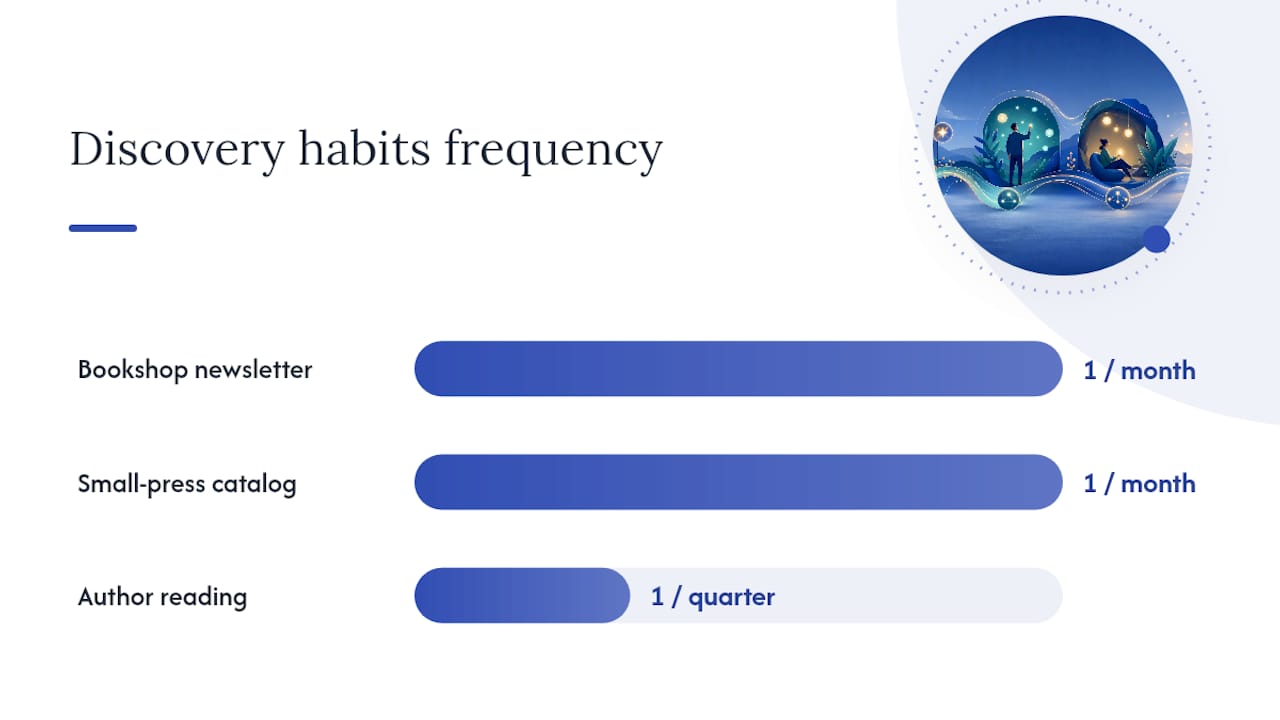
- Sign up for your favorite local bookshop's newsletter. Most run monthly and highlight new arrivals staff are personally excited about.
- Check one small press's catalog page per month. Most list a handful of titles per season, making it an easy skim.
- Attend one author reading, virtual or in person, per quarter. You'll hear voice and pacing directly, which tells you more than any review can.
What's the Best Way to Test a New Author Before You Commit?
Testing a new author shouldn't take more than thirty minutes of your time or a few dollars of your budget. Free samples, library loans, and short-form publications exist specifically so you can gauge whether a voice fits you before you're locked into 400 pages.
- Read the free sample first, always. Most retailers offer one, and it's usually the first chapter, which is exactly enough to judge voice and pacing.
- Set a hard rule: 15 to 30 pages or 30 minutes, whichever comes first. If the writing hasn't grabbed you by then, put it down. Sunk-cost thinking is the enemy of good discovery.
- Try public-domain or free platforms for style exploration. Project Gutenberg offers free classic texts, and audiobook samples let you hear pacing and dialogue rhythm in a way silent reading sometimes misses.
- Tag and shortlist anything promising, even if you're not ready to read it now. A note like "atmospheric, slow build, strong dialogue" six months later is more useful than a vague memory of liking something.
Pro Tip: Cross-reference a promising sample against one interview or review before buying the full book. A single interview quote often reveals whether an author's stated intent matches what you actually felt on the page.
If budget is the real constraint, there are practical ways to find affordable books from independent authors that don't involve waiting for a sale on a title you're not sure about yet.
How Do You Build a Repeatable Routine for Finding New Authors?
Discovery only compounds if it's a routine, not a one-time binge. Four steps, run weekly or monthly depending on how fast you read, keep new names flowing without turning into a second job.
- Seed. Pick one book or author you already love and write down, in a sentence, the mood or voice you're chasing. "Wry, first-person, morally gray protagonist" is a seed. "Fantasy" is not.
- Subscribe. Pick two curated newsletters or magazines and one community source, whether that's a subreddit, a podcast, or a specific reviewer's feed. Three sources is enough. More than five and you'll stop reading any of them.
- Sample. Set your short-sample rule from the previous section and commit to trying one new sample per week. Consistency beats intensity here.
- Save. Log anything promising into a shortlist tagged by mood, not just title. Export or review that list every couple of months so good finds don't disappear into a bookmark folder you never open again.
This is the same logic behind finding your next favorite book rather than your next random purchase. The routine does the work your memory can't.
How Does The Digital Reads Fit Into Your Discovery Routine?
The platform runs a catalog of digital titles spanning science fiction, fantasy, horror, thriller, and romance, offering instant downloads in common ebook formats, which removes the friction that usually kills a discovery habit: waiting, formatting hassles, or a library hold queue.
The catalog includes many independent authors, making it a practical sandbox for the sample-and-shortlist approach covered above.
A few ways to put it to use:
- Browse by genre rather than bestseller rank to see titles a bigger platform wouldn't surface.
- Start with a free download to test an unfamiliar voice before spending money.
- Check blog roundups like 20 Unknown Authors You Should Discover Before Everyone Else for a pre-vetted starting list.
- Use reader reviews on the platform as a quick second opinion before committing to a purchase.
A Reader's Routine in Action
A friend of mine kept circling the same five fantasy authors for two years. She finally seeded a mood-based recommender with one book, describing it as "slow-burn political fantasy with a morally gray narrator," subscribed to one literary magazine's newsletter, and gave herself a strict 20-page rule on anything new. Three samples in, she found a debut author she'd never have found on a bestseller shelf, read the whole book in a weekend, and now checks that same magazine every quarter. The takeaway: specificity in what you're seeking finds voices that a broad search never will.
— richard
Ready to Start Your Own Discovery List?
If you're tired of the same five names showing up everywhere, The Digital Reads gives you instant access to independent authors most retailers never put in front of you, no waitlist, no subscription, just a direct download in the format you want.
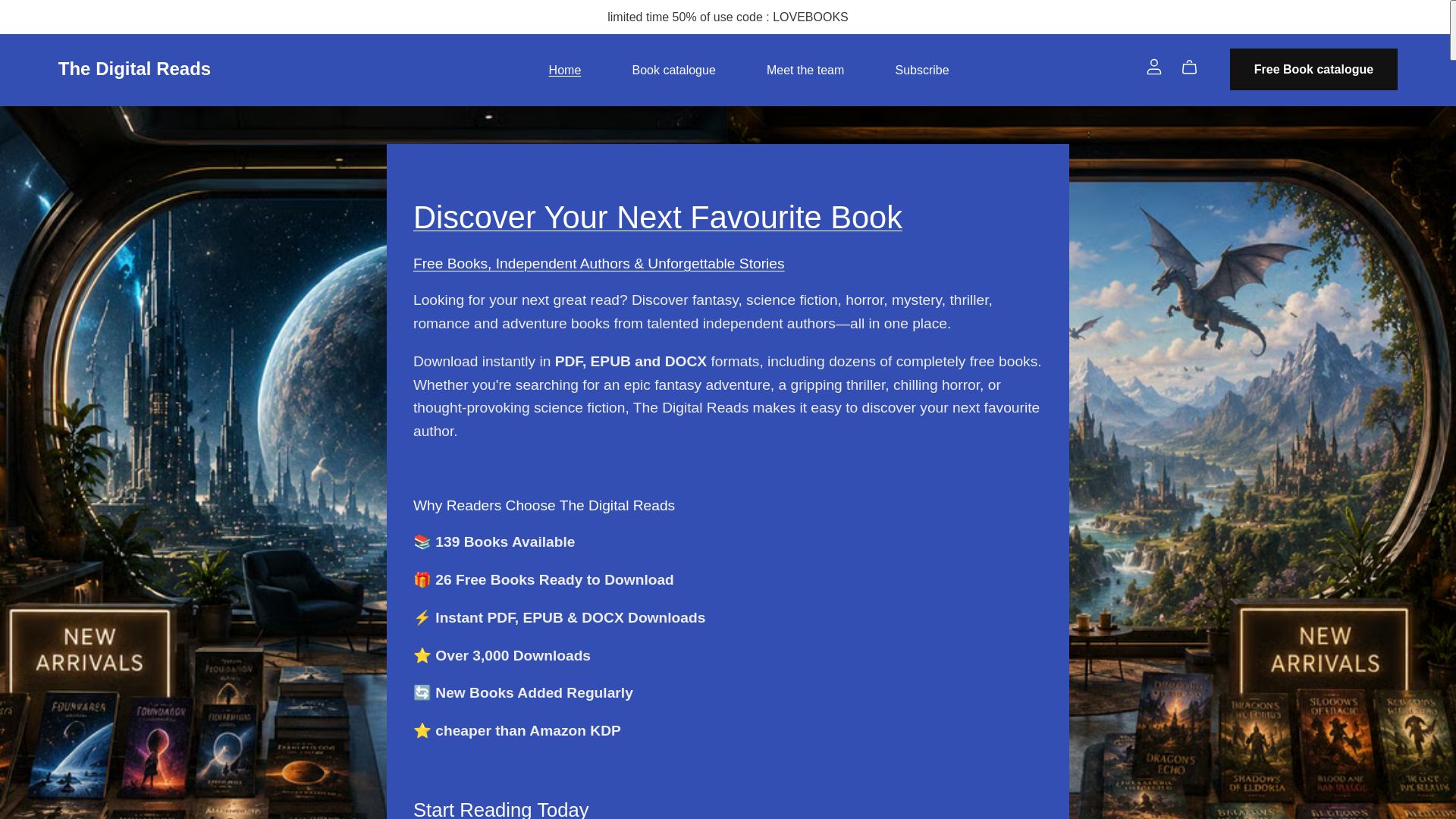
With 26 free titles and over 139 total across science fiction, fantasy, horror, thriller, and romance, it's built for exactly the sample-first approach this article walks through: grab a free download, test the voice against your own 20-page rule, and shortlist what lands. Compare that to waiting on a library hold or hunting through a retailer's algorithm-driven front page, and the appeal is straightforward: instant access, indie-first selection, and no cost barrier to trying someone new. Head to The Digital Reads and start with a free title in the genre you already love.
Where to Bookmark for Ongoing Discovery
A handful of sources are worth checking on a recurring basis rather than once and forgetting.
- Poets & Writers Literary Magazines directory: nearly 1,000 journals, filterable by genre and open reading period.
- Ploughshares Emerging Writers' Contest: annual winners in fiction, nonfiction, and poetry, each publication-backed and worth reading regardless of the current cycle.
- Forewords AI book recommendations: mood and meaning-based matching for readers who want to escape popularity-driven suggestions.
- Project Gutenberg: free public-domain texts for exploring style and voice at no cost.
- Your local independent bookstore's newsletter, plus one small-press catalog, checked monthly.
If you'd rather organize what you find than just bookmark it, a few designer-approved bookshelf styling formulas make a growing shortlist feel like a collection instead of a pile.
Sources
Popularity lists and editorial curation are not the same tool, and treating them as interchangeable is why so many readers feel stuck reading the same ten names on rotation. A bestseller chart tells you what sold. A curated list, built by an editor or trained reviewer who actually read the book, tells you what's good. BookBrowse's editors argue that readers looking for lasting, satisfying reads should weight curated recommendations over crowd-sourced rankings, because crowd rankings reward whatever already has momentum, not whatever is genuinely well written.
That distinction matters most when you're trying to find writers who haven't broken through yet. A book with 40,000 Amazon reviews got there because it was already popular enough to generate 40,000 reviews. A book an editor hand-picked got there because someone whose job is reading widely thought it deserved your attention now, before the algorithm noticed.
Here's how to actually use curated platforms instead of just browsing them:
- Ploughshares Emerging Writers' Contest
- Literary Magazines - Nearly 1,000 Journals and Magazines | Poets & Writers
If you want a running example of what this looks like in practice, The Digital Reads regularly surfaces books before they trend, pulling from independent authors that bigger retail platforms simply don't prioritize. Expect a mix of free and paid titles, organized by genre rather than sales rank, which is a meaningfully different browsing experience than scrolling a "customers also bought" carousel.
FAQ
What are the top new books released recently?
There's no single universal list, but industry roundups like Publishers Weekly's Writers to Watch profile debut authors and anticipated releases each season, making them a more reliable snapshot than a generic bestseller chart.
Who are the best new authors to read right now?
The strongest answer depends on your taste, which is exactly why mood-based recommenders and curated newsletters outperform generic "best authors" lists. Seed a tool like Forewords with a book you loved to get names matched to your actual reading preferences.
Which publishers are looking for new authors?
Literary magazines and small presses are the most consistent entry point. The Poets & Writers directory lists nearly 1,000 magazines filterable by open reading period, and many small presses accept unsolicited submissions from debut writers year-round.
What's the best new book to read right now?
That depends entirely on the mood and voice you're chasing, but a strong starting method is to grab a free sample or download, apply a 15 to 30 page test, and only commit once the voice actually holds your attention. The Digital Reads' free download catalog is built specifically for that kind of low-risk sampling.
How do I find upcoming authors before they get popular?
Follow literary magazine contest winners, subscribe to two or three curated newsletters, and use mood-based recommendation tools seeded with a specific favorite book rather than a broad genre label. That combination consistently surfaces writers before bestseller charts catch up.