
If you want the essentials without wading through endless lists, start here: H.G. Wells's The War of the Worlds for the classic template, Peter Watts's Blindsight for cerebral dread, Jeff VanderMeer's Annihilation for weird ecological horror, Liu Cixin's The Three-Body Problem for hard-SF scope, and Octavia Butler's Xenogenesis trilogy for invasion as transformation rather than war. Full breakdowns and reading pathways follow below.
TL;DR:
- Modern invasion fiction often explores ecological and psychological themes, emphasizing slow transformation and the alien's incomprehensibility over spectacle.
- Series like Octavia Butler’s Xenogenesis, Liu Cixin’s Three-Body Problem, and David Gerrold’s Chtorr deepen invasion stories through extended, slow-unfolding narratives that explore societal and biological change.
- The genre spans subgenres from military and ecological invasions to barrier zones and transformation stories, each delivering distinct pacing and thematic focuses.
- For newcomers, starting with accessible titles like Sleeping Giants or Childhood’s End offers a gentle entry before engaging with denser, idea-driven works like Blindsight.
- Invasion stories are increasingly valued for their questions about human response to the unfathomable, shifting away from spectacle to explore the alien as a mirror for human institutions and biology.
Table of Contents
- The Best Alien Invasion Books to Start With
- Invasion Subgenres and What Each One Delivers
- Series Worth the Long Commitment
- Where to Start: Reading Pathways by Taste
- Why These Invasion Stories Still Work
- Find These Books (and More) on The Digital Reads
- An Editor's Take on Where Invasion Fiction Is Headed
- Get Reading: Alien Invasion Books on The Digital Reads
- Sources
- FAQ
The Best Alien Invasion Books to Start With
Alien invasion books have never been just about lasers and collapsing skylines. The best ones use the invasion as a lens: what happens to people, to power, to the planet, when something arrives that doesn't play by human rules? This list mixes the foundational classics with the modern books that have quietly redefined what an "invasion" story can do.
We've grouped these by the kind of reading experience they deliver, because "alien invasion" covers wildly different territory. A fan of tense military standoffs and a fan of slow ecological dread are looking for very different books, even though both fall under alien invasion sci fi.
The foundational classics
- The War of the Worlds by H.G. Wells. The book that built the genre's blueprint. Wells's Martians land in Victorian England and dismantle its confidence in a few brutal chapters, and the novel is still widely cited as the seminal alien invasion text, the one every later writer is either echoing or reacting against. Start here if you want to understand where the entire subgenre's DNA comes from.
- The Day of the Triffids by John Wyndham. Not technically alien, but it belongs in any serious conversation about invasion literature because it pioneered the "society quietly falls apart" mode that so many modern books borrow. Good for readers who want collapse without combat.
- Childhood's End by Arthur C. Clarke. The benevolent-invasion counterpoint to Wells. Clarke's aliens arrive as saviors, and the horror creeps in slowly, through what their help actually costs humanity. Pairs well with anyone who assumes all invasion stories end in gunfire.
Modern weird and ecological picks
- Annihilation by Jeff VanderMeer. A biologist enters Area X, a quarantined zone where nature has stopped following its own rules. This is a barrier story in the purest sense: something has drawn a line on a map, and nobody inside it behaves the way they should. FiveBooks curator Seth Dickinson singles out exactly this kind of barrier and ecological invasion approach as more intellectually rewarding than a straightforward firefight.
- Roadside Picnic by Arkady and Boris Strugatsky. The "Zone" here is even stranger, an area where alien visitors left behind objects nobody understands, guarded by physics that kills the careless. It's the book that inspired the video game S.T.A.L.K.E.R. and half of modern zone fiction. Slow, melancholy, and unforgettable.
- The War Against the Chtorr series by David Gerrold. Full ecological invasion, executed over multiple books: alien ecosystems slowly replacing Earth's, one species at a time. Good for readers who want invasion horror measured in decades rather than days.
Hard science fiction and intellectual dread
- Blindsight by Peter Watts. A first-contact mission meets something so alien that human consciousness itself becomes the plot's central mystery. Watts writes aliens that are genuinely, unsettlingly other, which is exactly the quality Dickinson flags as what separates memorable invasion fiction from routine spectacle. Dense, demanding, and worth every page for readers who like their sci-fi cold and precise.
- The Three-Body Problem by Liu Cixin. Chinese physicists, a virtual reality game that's actually a warning, and a civilization four light years away with a plan spanning centuries. This is invasion fiction played at civilizational scale, patient in a way most Western invasion novels aren't.
- A Matter for Men by Whitley Strieber. An ecological invasion book Dickinson specifically points to for how it handles alien motive and method over simple combat. Good next step after Chtorr if you want more of that slow-creep dread.
Accessible and character-driven reads
- Xenogenesis trilogy by Octavia Butler (Dawn, Adulthood Rites, Imago). Humanity survives near-extinction only because an alien species, the Oankali, intervenes and genetically merges with what's left of us. It's invasion as biology and consent rather than war, and it remains one of the most quietly radical takes on the trope ever written.
- The Forever War by Joe Haldeman. Military invasion done right, following one soldier through decades of relativistic time dilation while fighting an enemy humanity barely understands. Fast, brutal, and a good entry point for readers who came looking for combat.
- Sleeping Giants by Sylvain Neuvel. A found-artifact mystery wrapped around ancient alien tech, told through interview transcripts. Breezy pacing makes it a strong pick for readers newer to the genre.
- The Kraken Wakes by John Wyndham. An invasion from the ocean depths rather than the sky, unfolding as a slow-building catastrophe. Underrated compared to Wyndham's other work, and worth seeking out.
Pro Tip: If you're not sure which subgenre you'll like, read the first fifty pages of both Blindsight and Xenogenesis*. If Watts's cold, clinical dread grabs you, lean hard-SF and barrier stories. If Butler's intimate, bodily stakes grab you, lean ecological and character-driven invasion fiction.*
Invasion Subgenres and What Each One Delivers
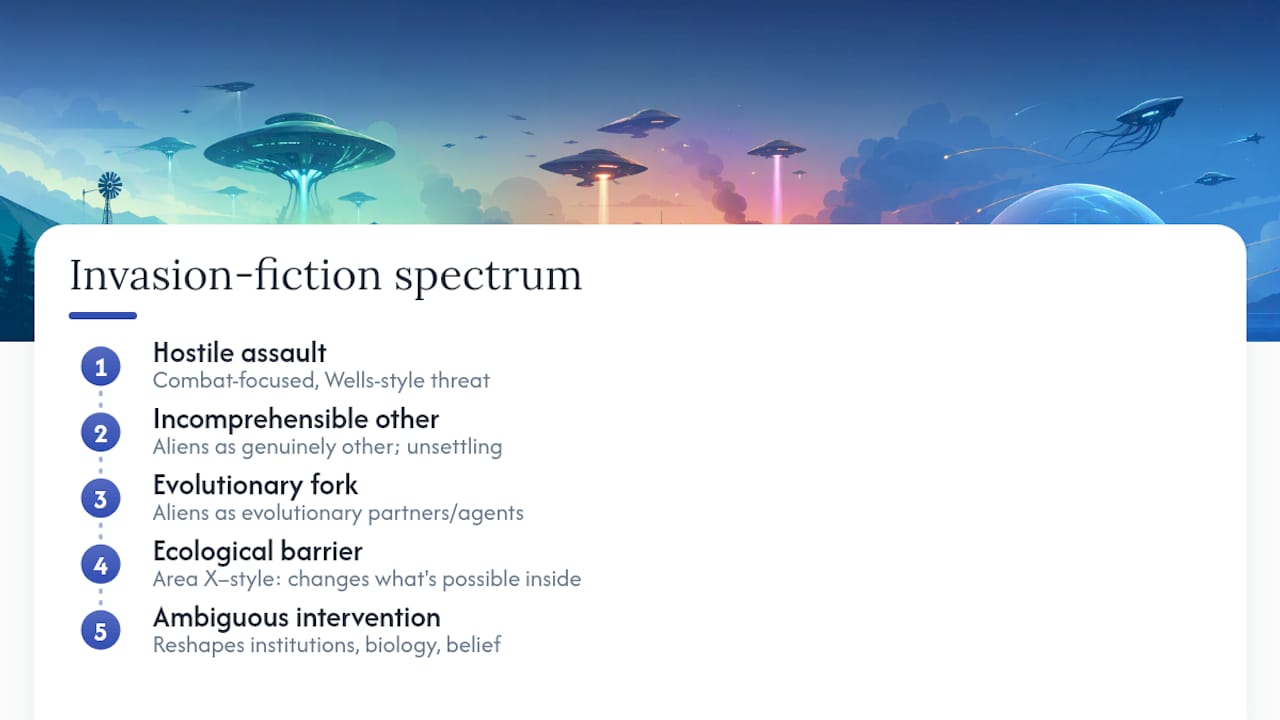
Not every alien invasion novel wants to give you the same experience, and knowing the subtype before you pick one up saves you from mismatched expectations. Reading lists from institutions like the New York Public Library frame invasion fiction as a spectrum, running from outright hostile assault all the way to ambiguous or even benevolent intervention. That spectrum is the real map of the genre.
- Military invasion. Straightforward conflict: aliens attack, humans organize a response. The War of the Worlds and The Forever War sit here. Expect fast pacing, clear stakes, and relatively light cognitive load.
- Ecological invasion. The alien presence spreads like an infection through Earth's biosphere rather than arriving with weapons. The War Against the Chtorr and A Matter for Men are the genre's clearest examples. Expect slower pacing and dread that builds over books, not chapters.
- Barrier or zone stories. A defined area where the normal rules stop working. Annihilation and Roadside Picnic both use this structure. These reward patience and tolerance for ambiguity, since answers rarely arrive clean.
- Psychological and first-contact stories. The horror or wonder comes from not understanding the alien mind, not from combat. Blindsight leads this category, alongside Childhood's End. Expect denser prose and ideas that demand rereading.
- Hybrid transformation stories. Invasion reframed as biological or social change rather than war. Xenogenesis is the defining example, treating the alien encounter as something closer to forced evolution.
The Guardian's rundown of the genre's strangest entries makes a point worth remembering: the invasion books that stick with readers longest are usually the ones that subvert the "planetary destruction" formula rather than deliver it straight. If you've already read Wells and Haldeman and want to go deeper into the genre, the ecological and barrier categories are where the newest ideas are happening.
Series Worth the Long Commitment
Some of the best invasion fiction doesn't fit in one book, and knowing that going in changes how you should approach it.
- Xenogenesis trilogy (Octavia Butler). Start with Dawn. The three books track one family's adaptation across generations, and the payoff is philosophical as much as narrative, a slow reframing of what "invasion" even means when the invaders offer survival in exchange for transformation.
- The Three-Body Problem trilogy (Liu Cixin). Start with the title book, but know that the trilogy's real ambitions, spanning centuries and civilizations, only reveal themselves in the second and third volumes, The Dark Forest and Death's End. This is a series that rewards patience with scale few Western SF trilogies attempt.
- The War Against the Chtorr (David Gerrold). Start with A Matter for Men. Gerrold builds his ecological invasion gradually, one book at a time, so the horror compounds rather than peaks early.
Dickinson's FiveBooks interview treats barrier and ecological narratives as forms that specifically benefit from series-length room to breathe, since a single novel rarely has space to show an ecosystem, or a society, fully transform. If you're choosing between a standalone and a series, ask yourself whether you want a complete answer in one sitting or a slow unraveling across years of reading. Standalones like Blindsight and Annihilation deliver tighter, more contained payoffs; series ask for more trust upfront but reward it with scope no single book could hold.
Where to Start: Reading Pathways by Taste
Pick the pathway that matches what you're actually craving, not what you think you should read first.
- If you want fast, tense action: Start with The War of the Worlds, then move to The Forever War. Both deliver clear stakes and quick pacing, with minimal ambiguity about who the heroes and threats are.
- If you want cerebral, demanding sci-fi: Start with Blindsight, then follow with The Three-Body Problem. Expect dense ideas and prose that asks you to slow down; both books reward a second read.
- If you want weird, unsettling atmosphere: Start with Annihilation, then follow with Roadside Picnic. Both are barrier stories heavy on mood and light on clean resolution, so go in ready for ambiguity rather than answers.
- If you want character-driven, emotionally complex invasion fiction: Start with Dawn (Book 1 of Xenogenesis), then continue the trilogy. Butler's work carries some intense content around consent and bodily autonomy, worth knowing going in, but delivers one of the genre's most rewarding long arcs.
- If you're newer to science fiction generally: Start with Sleeping Giants or Childhood's End, both accessible entry points with clear prose, then graduate to The War of the Worlds for the genre's foundational text.
Whichever pathway you pick, the second book on each list assumes you liked the first one's mode, not just its plot. If Annihilation's ambiguity frustrated you rather than hooked you, skip Roadside Picnic and try the military-invasion pathway instead.
Why These Invasion Stories Still Work
The best alien invasion literature rarely survives on spectacle alone. What keeps these books in print decades later is almost always a deeper question they're asking about how humans respond when the rules change.
The best invasion stories make the alien genuinely other, pushing the reader toward the edges of human understanding rather than settling for a simple war narrative.
That framing, drawn from Seth Dickinson's FiveBooks selections, explains why Blindsight and Xenogenesis outlast books with bigger explosions. Watts's aliens aren't evil; they're incomprehensible, and that's scarier. Butler's Oankali aren't conquerors; they're something closer to an evolutionary fork in the road, and that's stranger and more intimate than any war could be.
The ecological and barrier subtypes lean into this even harder. The Guardian's analysis of the genre's strangest entries points out that invasion fiction hits hardest when the alien presence reshapes human social order rather than just providing a backdrop for combat. Annihilation's Area X doesn't attack anyone directly. It just changes what's possible inside its border, and that's more unsettling than any death ray.
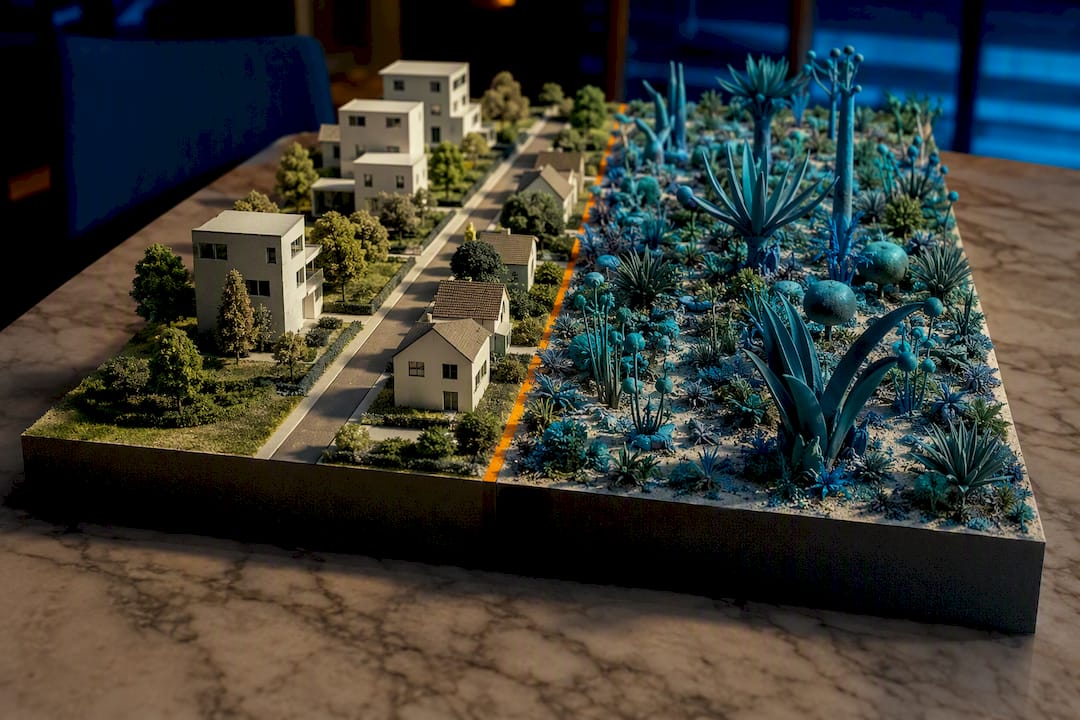
There's a reason libraries frame these books on a spectrum rather than a single formula: invasion fiction covers everything from hostile assault to ambiguous intervention, and readers who only know the Wells template are missing most of what the genre actually does. The books that endure treat the invasion as a mirror held up to human institutions, biology, and belief, not just a threat to repel.
Find These Books (and More) on The Digital Reads
Once you've picked a subgenre, tracking down the actual titles shouldn't be the hard part. Thedigitalreads carries a catalog of more than 139 titles across science fiction, fantasy, horror, thriller, and romance, including 26 free titles, with instant downloads available in PDF, EPUB, and DOCX formats.
That matters for alien invasion books specifically, because a lot of the genre's most interesting work, especially the ecological and barrier stories Dickinson champions, comes from independent authors who never get shelf space at a chain bookstore. Thedigitalreads was built around exactly that gap, giving indie authors a direct line to readers who want more than the same five classics recycled by every "best of" list.
If you want a deeper dive into recent invasion fiction, Thedigitalreads' blog covers new alien invasion releases and first-contact stories that go horribly wrong, both useful next stops once you've worked through the picks above. And for readers curious how invasion fiction connects to broader cultural movements, it's worth reading how Afrofuturism shaped writers like Octavia Butler in this look at Sun Ra and Butler's shared roots.
An Editor's Take on Where Invasion Fiction Is Headed
The genre has been drifting away from spectacle for a while now, and I think that's the right direction. The books getting real attention lately aren't the ones with the biggest ships or the loudest battles. They're the quiet ones: an ecosystem slowly rewriting itself, a zone nobody can explain, a mind so alien it breaks the narrator trying to describe it. That's not a trend I expect to reverse, because ambiguity ages better than spectacle. A laser battle from 1953 reads as quaint now. The unanswered questions in Roadside Picnic still itch.
My personal underrated pick: The Kraken Wakes. Wyndham gets overshadowed by his own Day of the Triffids, but this one, an invasion rising from the ocean rather than the sky, does slow-building dread better than almost anything from its era.
If you've got a pick that belongs on this list and didn't make it, I want to hear about it. The best invasion fiction tends to surface through word of mouth long before it shows up on a curated list like this one.
— richard
Get Reading: Alien Invasion Books on The Digital Reads
Reading about these books is one thing. Actually getting your hands on them without hunting across five different retailers is another. Thedigitalreads solves that specific problem: one catalog, instant downloads in PDF, EPUB, or DOCX, and a mix of free and affordably priced titles so you can try a new subgenre, like barrier stories or ecological invasion, without committing to a full-price gamble.

Whether you're chasing the classic dread of The War of the Worlds or want to explore the newer wave of ecological and psychological invasion fiction from independent authors, browse the full collection to start your next read tonight, or head to the Thedigitalreads homepage to see what's new this month.
Sources
- The Best Alien Invasion Books - FiveBooks
- Top 10 strangest alien invasion novels | The Guardian
- Reading list: Prepare yourself for an alien invasion | NYPL
- The War of the Worlds by H. G. Wells | Penguin Random House
FAQ
What is the best book about alien invasions?
The War of the Worlds by H.G. Wells is the most widely cited foundational choice, but Blindsight by Peter Watts is the strongest pick for readers who want a modern, intellectually demanding take on the trope.
What are some good alien invasion novel series?
The Xenogenesis trilogy by Octavia Butler, The Three-Body Problem trilogy by Liu Cixin, and The War Against the Chtorr series by David Gerrold each deliver invasion stories that unfold across multiple books rather than one.
How do alien invasion books overlap with dystopian fiction?
They overlap heavily when the invasion reshapes human society and institutions rather than staying focused on combat. Books like Xenogenesis and The War Against the Chtorr blur the line, since both use the alien presence to force lasting social and biological transformation.
What is the best book on aliens for a newer reader?
Sleeping Giants by Sylvain Neuvel and Childhood's End by Arthur C. Clarke are both accessible entry points with clear prose, good starting places before tackling denser books like Blindsight.
Where can I find and download alien invasion books instantly?
Thedigitalreads offers instant downloads of alien invasion titles and other science fiction in PDF, EPUB, and DOCX formats, including free titles for readers who want to sample a subgenre before buying.
Recommended
- Best Alien Invasion Books to Read in 2026: Discover New Sci-Fi Masterpieces Alongside the Greatest Classics
- Best New Alien Invasion Books This Year
- Why Modern Science Fiction Is Replacing Traditional Alien Invasion Stories
- Best First Contact Science Fiction Books for Readers Who Love Alien Encounters